


The Glue Talk Blog
Forbes reports that 41% of workers have left workplaces because of unsafe conditions. With the great resignation moving into the future, organizations must address the environments people work in to keep valuable workers and spare the expense of training new employees.
Challenges in Hot Melt Technology
Worker safety is always a top priority, and there is a renewed focus from governments and business to improve workplace conditions. In line with these developments, many adhesive manufacturers are focusing on low free isocyanate monomer, a family of highly reactive, low weight chemicals used to formulate reactive hot melts (RHM).
RHMs generally include certain hazardous components, such as monomeric diisocyanates. Additional training can effectively reduce potential harm to workers, but traditional RHMs do require extra time and expense to train operators properly and safely, which challenges manufacturers to balance expenses and time management more proactively.
Today’s process for achieving a low monomer (<0.1%) adhesive formula poses multiple challenges, including:
- Expensive and energy intensive processes;
- Reliance on single-sourced raw materials;
- Slower and longer cure time;
- Reduced space for formulation;
- Higher cost.
Real Risks of Traditional RHMs
The risks of using traditional RHMs are high. For example, sensitization (an allergic reaction that causes major lung and respiratory problems) may permanently affect workers' health. This syndrome happens by both contact on the skin and inhaling airborne particles when the molten form of adhesive is near.
Labeling traditional RHM instead of standard free monomer shows its hazard potential. A high risk rating means the adhesive requires more stringent labeling and indicates a higher degree of harm. Here, a low free isocyanate monomer formulation would solve much of the potential risks to workers who handle this class of adhesives and have less severe safety risk labeling.
H.B. Fuller Steps up
H.B. Fuller has developed a simple and new way to create low monomer RHMs. The new route for creating this energy-efficient, high-performing, and easier-to-produce RHM increases formulation space and qualifies for label-free packaging in the European Union (EU).
The optimized reaction temperature, reaction time, and NCO/OH ratio enable tuning properties for a wide range of applications. Many grades are possible, and low viscosity, sprayable, high green strength far surpass traditional standard monomer hot melts. These innovations use readily available raw materials, and no new manufacturing equipment is required.
Some of the benefits of our new low monomer RHM include:
- Similar or slightly higher viscosity;
- Better green strength;
- Better application stability;
- Similar or slightly higher cost;
- No hazard labeling.
Low-hazard, high-performing RHMs available in the EU now should be available for the global market soon. Formulations in development will serve the automotive, durable assembly, and electronics markets with lower exposure-related risks.
Safer Products Now
H.B. Fuller’s Rakoll adhesive solutions have low monomer content and deliver excellent performance for woodworking applications that bond to a wide variety of materials. This line maximizes business efficiencies and are made of more sustainable chemical components. Our patented, low monomer RHM allows flexible formulations of adhesives that combine different green strengths, viscosities and open time.
Recognition of Adhesive Technology
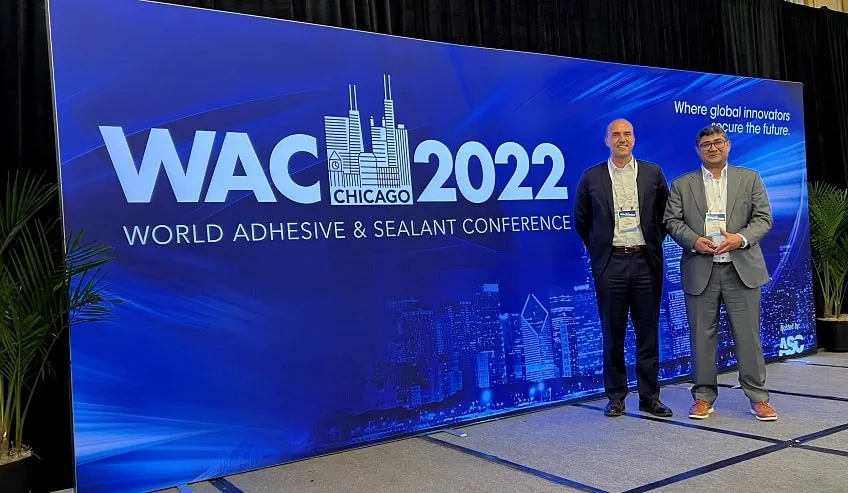
H.B. Fuller is thrilled to announce that our Low Monomer/Emission Reactive Hot Melt Adhesive has been recognized by The Adhesive and Sealant Council (ASC) as 1st Runner Up for the 2022 Best Innovations Award. Our team – including Sudipto Das, research scientist and manager for Woodworking, and João Magalhães, global director for Wood & Composites, were present at the event to receive the award. This is an exciting journey for our woodworking team, and we are looking forward to further demonstrating how we’re helping create a safe and sustainable future for polyurethane products.
We think our new hot melt formula is unlike anything on the market. Contact us to learn more about the latest products offered by H.B. Fuller.
Blog Categories
Blog Categories
Archive
-
2026
-
January (5)
- Elevating Performance: How H.B. Fuller Powers the Future of Elevator Manufacturing
- Navigating EPR Legislation in the U.S.: How Adhesives and Packaging Can Meet Regulations
- Powering the Future: The Growth of New Energy Storage
- Setting the Record Straight: Why Roof Coatings Are a System, Not a Shortcut
- Strategic Partnerships are Reshaping Roofing Distribution—Here’s How H.B. Fuller Helps you Stay Ahead
- February (5)
-
March (5)
- Adhesives and Recyclability: Why They Matter
- Flexible Packaging Trends for 2026: From Momentum to Maturity
- Recycling Day: How Innovation and Responsibility Are Transforming the Future of Materials
- Why RRO Expertise Matters in Delivering Better Roofing Solutions
- Winter Tips for Using Roofing Adhesives
-
April (6)
- From Steam to Sustainable
- How Minnesota is Advancing H.B. Fuller’s Next Chapter of Global Growth
- How Spray Applied Canister Adhesives Help Roofing Contractors Overcome Global Labor Shortages
- Luxury Yacht Trends Meet Advanced Bonding Technologies
- More Than a Sealer: Introducing Lash Fuser Smart Bonding Technology
- Navigating Packaging Trends and Challenges: Advantra® Earthic™ 9500 as the Game-Changing Solution
-
May (5)
- A Buyer’s Guide to Flame-Retardant Foams
- ASC 2026 Insights: Sustainable Adhesives & Award Winning Innovation
- New Partners and Superstar Volunteers—See How H.B. Fuller is Making an Impact
- Sesame® Handle System: A Gripping New Product Years in the Making
- The Growing Importance of Masking Tapes Across Industries and How Gel-Tac™ Masking Delivers Reliable Results
- June (4)
- July (2)
-
August (6)
- Choosing the Right Adhesive: Electronic Applications
- How Adhesives and Sealants are Used in Glass Windows
- Choosing the Right Adhesives for Packaging Applications
- H.B. Fuller Company Foundation Announces First Global Grantmaking Partners
- RV Industry Trends 2026: Meeting Manufacturing Challenges with Adhesive & Sealant Technology
- What We Learned About Gen Z Beauty Buying Behavior
-
September (7)
- A Guide to Bonding Agents
- From Design to Recycling: How Adhesives Impact Paper and Board Packaging
- H.B. Fuller’s R&D Research Fellowship Driving Innovation and Business Impact
- 6 Best Practices for Engineered Wood Manufacturing
- Three Ways to Ensure Beauty Adhesives Meet Safety Standards
- Understanding DIY Lash Adhesive Ingredients: What's Really Behind the INCI List?
- Vacuum Infusion: The Critical Role of Sealing, Material Positioning and Process Reliability
-
October (4)
- How Beverage Brands Are Reducing Plastic with Smarter Multipack Solutions
- Leading Through Innovation: How Huhtamaki and Bin Dasmal Group Are Creating Solutions for Tomorrow
- Navigating EPR Legislation in the U.S.: What Producers and Packaging Partners Need to Know
- When Vapor Barrier Performance Matters: Protecting Insulated Systems from Moisture Intrusion
-
January (5)
-
2025
- January (4)
- February (5)
-
March (5)
- Celebrating Women in Science on International Women’s Day
- Choosing the Right Adhesives and Sealants for Automotive Applications
- Debonding on Demand in Electric Vehicle Batteries: The Future of Efficient Recycling and Reuse
- Domestic Production & Tax Credits: The IRA’s Impact on Solar Manufacturing
- Why We Say Cosmetic Adhesives – The Science Behind Beauty Formulations
- April (2)
-
May (7)
- Auto Dilution System (ADS) for Enhanced Performance in Tissue and Towel Manufacturing
- Beauty Adhesives in Europe
- Benefits of Using Thermally Conductive Adhesives and Encapsulants in Li-Ion Batteries
- Innovation Through Collaboration: H.B. Fuller’s Customer Innovation Awards Winners
- H.B. Fuller Expands Manufacturing Capabilities in IMEA Region
- Talking Beauty Chemistry - How to Simplify and Communicate
- Top Consumer Trends Shaping the Tissue and Towel Product Market
- June (4)
-
July (9)
- Barrier Coatings for Paper-Based Food Packaging: A Guide to Compliance and Performance
- Can Lash Adhesives Work in Low Humidity
- Choosing the Right Adhesive: Hygiene
- H.B. Fuller Advances Commercial Roofing with Millennium PG-1 EF ECO₂
- How Advanced Adhesives Help Companies Thrive In The Circular Economy
- How Innovative Adhesive Technology and Manufacturing Practices Drive Sustainability
- Label Adhesives at a Crossroads: Meeting the Demands of a Sustainable, High-Performance Future
- Smarter Bonding as a Secret Weapon for Improving Industrial Assembly
- Stick Smart: Why Clean Removal and Easy Adhesion Matter in DIY Wall Décor
- August (3)
- September (3)
-
October (6)
- 2025 Global Trends in the Disposable Hygiene Industry
- Launching Fuller Impact: A New Era in Supporting Global Communities
- Lightweight Adhesives for EV Manufacturing: Reducing Weight, Improving Range
- Make a Difference 2025
- The Hidden Expense of Low-Cost Butyl
- The Role of Adhesives in Next-Gen Renewable Energy Storage Solutions
-
November (6)
- From Solar Panels to Recycled Water: Driving Sustainability and Business Impact in Colombia
- Electrifying the Future: 2026 Trends in Bus Manufacturing and H.B. Fuller’s Role in Sustainable Innovation
- Engineered Wood Adhesives Guide
- India’s Two- and Three-Wheeler Market: Accelerating Toward an Electric Future
- Three Emerging Trends in the Water-based Polymers Industry
- Where Science Meets Skin: H.B. Fuller Powers STEM Learning at the Science Museum of Minnesota
- December (2)
-
2024
- January (1)
- March (1)
- April (1)
- May (2)
- June (2)
-
July (5)
- Emerging Trends in Commercial Roofing and the Pivotal Role of Adhesives
- How Adhesives Advance Eco-Friendly Food Packaging
- How to Build the Beauty Brand of Your Dreams
- Sustainability Terminologies: A Journey Into the Words that Define Environmental Impact
- The Power of Silicone Adhesives and Sealants in Solar Panel Applications
- August (4)
- September (4)
- October (1)
- November (4)
- December (4)
- 2023
-
2022
- February (4)
- March (3)
- April (1)
- May (2)
- June (4)
-
August (6)
- Beverage Labeling Market in Africa: Key Trends, Opportunities, and Innovations
- H.B. Fuller’s Glue House: Scavenger Hunt
- Increasing Global Aging Population: Impacts and Challenges
- Innovations and Key Challenges in Sustainable Disposable Absorbent Hygiene Products
- Supporting Racial Equity in Our Community
- Top 5 Reasons to Invest in H.B. Fuller
- September (4)
- November (2)
- December (2)