

The Glue Talk Blog
Workplace fatalities totaled 5,333 in 2019—a two-percent increase over 2018. The number of preventable, non-fatal workplace injuries is exceedingly higher. To prevent injuries in the workplace, implementing safety protocols and following best practices for workplace safety is imperative to the success of businesses, the safety of workers, and the continued push for safer working conditions. Hot melt adhesives are no exception to other hazards in the workplace and require special care to handle safely.
Developments in Hot Melt Safety and Sustainability
The chemical components of hot melts include polymers, plasticizers, tackifiers, and antioxidants, each tailoring properties of the product to ensure high bond strength under varying temperature and operational conditions.
Polymers are the core ingredient that acts as the adhesive framework. Plasticizers affect viscosity. Tackifiers add to the robustness of the adhesive through performance attributes. Antioxidants affect the ability for hot melts to withstand the high temperatures for a prolonged amount of time without compromising the integrity of the chemical composition.
With new developments in hot melt adhesives, the products should boost the efficiency of manufacturing and the value of the products created using hot melt adhesives. This opens the doors for these products to meet new regulations for safety and sustainability in these applications.
Advances in the chemical composition enable the hot melt products to resist bond failure at a spectrum of temperatures, be compatible with a variety of substrates, reduce waste, decrease downtime in production, and gain more mileage out of the amount of product used. An increasing focus on sustainability has also improved the environmental friendliness of hot melts both in the hot melt products themselves and the processes necessary to use them effectively and safely.
Hot Melt in Use
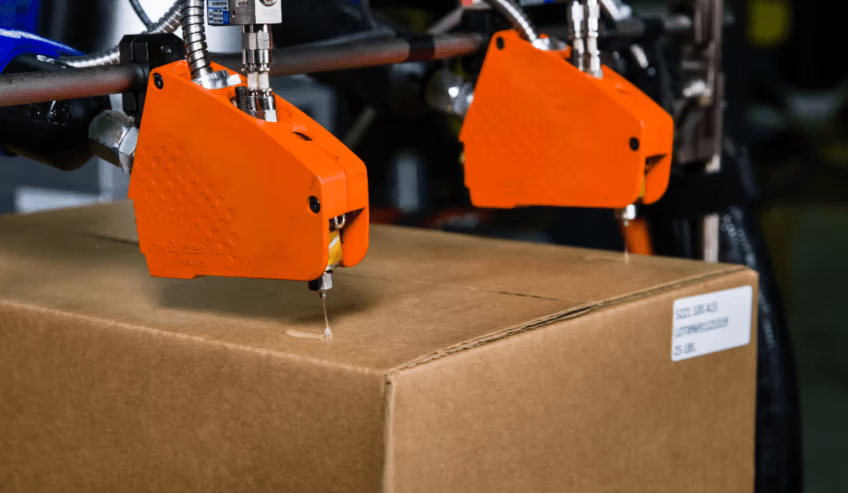
Hot melt adhesives, most commonly used in package sealing and bookbinding, require special care to avoid serious burns that result in slower line productions and downtime for workers who experience injury.
Although hot melt adhesive is harmless as a raw, unheated thermoplastic, to be functional, a great degree of heat must be added to transform the material into a molten form, which is typically applied at 350oF. Accordingly, workers need to take the utmost care and follow strict guidelines to handle hot melt products safely. To keep operators safe, a whole line dedication to hotmelt safety practices and managing risk is necessary.
Adoption of Precautions
Personal protective equipment (PPE) at minimum includes goggles with side guards and gloves with strong resistance to high temperatures. To add to PPE, safety data sheets (available with all hot melt products) expand on the safety equipment necessary to help workers perform in a workspace with optimal precautions.
One big step towards promoting ideal hot melt safety conditions is regular maintenance of the equipment workers use to apply hotmelt products. From maintenance of the hoses and delivery systems to optimal consistency in temperatures, the monitoring and servicing of devices should occur routinely.
Tanks for hotmelt materials should be filled to three-quarters of the capacity to ensure the hot melt machines perform best and achieve the appropriate temperature for application. To fill the tanks with minimal risk, scoops should be used to avoid contamination, reduce splashing, and prevent spills. Any pellets or raw hotmelt materials that have spilled on the ground should be cleaned up and discarded immediately to prevent workers from slipping on the product and to avoid contamination. Auto-filling systems are a great way that spills can be prevented and dirt and debris kept out of the tanks while maintaining adhesive levels, freeing time of the operators to do other tasks on the line. Hoses on hot melt equipment should also not touch the floor to prevent heat-sinks and extend the life of the hose.
Maintenance, Performance, and Safety
Char is an avoidable hazard that decreases the efficiency of equipment performance, wastes product, and decreases productivity due to suboptimal conditions that cause it. The burnt organic material (char) starts gelling, adhering to the tank’s and hoses’ walls and degrading the system over time. Char also shifts the viscosity profile of the hot melt materials, compromising consistency.
Clearing equipment of char greatly improves the efficiency of hot melt passing through the application equipment. Removing char from hot melt devices is best done during downtime while the adhesive cools to avoid lost production time and eliminates disruptions when the machine would normally be in use. All maintenance serves to limit workplace hazards from equipment malfunction and improve the performance of the hot melt when workers use it.
What to Do in an Emergency
Consistency in application processes and maintenance goes a long way to ensuring optimal function of the hotmelt and devices and keeping workers safe. But if a safety incident does occur, some basic precautions will help.
Any molten hot melt that comes into contact with the surface of skin should be treated quickly. Do not attempt to wipe the hot melt off the affected area. Instead, run cool water over the exposed surface of the skin and wrap it with a cool bandage and seek medical attention immediately. Safety data sheets should be consulted before use to review all necessary personal protective equipment and precautions necessary to prevent injury.
To add to safety and productivity, having the proper warnings and guards in place along with utilizing hot melt equipment standby measures in place while the line is in production reduces workers' exposure to potential burns and reduces the risk of charring and equipment malfunction. With the right measures, the temperature of the hot melt can be adjusted quickly, allowing workers to deal with emergencies promptly and ensure line uptime is optimized.
Learn from Us
At H.B. Fuller, we have the expertise and latest technologies for hot melt adhesives to meet safety and sustainability measures. Learn more in our H.B. Fuller Academy
Blog Categories
Blog Categories
Archive
-
2026
-
January (5)
- Elevating Performance: How H.B. Fuller Powers the Future of Elevator Manufacturing
- Navigating EPR Legislation in the U.S.: How Adhesives and Packaging Can Meet Regulations
- Powering the Future: The Growth of New Energy Storage
- Setting the Record Straight: Why Roof Coatings Are a System, Not a Shortcut
- Strategic Partnerships are Reshaping Roofing Distribution—Here’s How H.B. Fuller Helps you Stay Ahead
- February (5)
-
March (5)
- Adhesives and Recyclability: Why They Matter
- Flexible Packaging Trends for 2026: From Momentum to Maturity
- Recycling Day: How Innovation and Responsibility Are Transforming the Future of Materials
- Why RRO Expertise Matters in Delivering Better Roofing Solutions
- Winter Tips for Using Roofing Adhesives
-
April (6)
- From Steam to Sustainable
- How Minnesota is Advancing H.B. Fuller’s Next Chapter of Global Growth
- How Spray Applied Canister Adhesives Help Roofing Contractors Overcome Global Labor Shortages
- Luxury Yacht Trends Meet Advanced Bonding Technologies
- More Than a Sealer: Introducing Lash Fuser Smart Bonding Technology
- Navigating Packaging Trends and Challenges: Advantra® Earthic™ 9500 as the Game-Changing Solution
- May (4)
-
January (5)
-
2025
- January (4)
- February (5)
-
March (5)
- Celebrating Women in Science on International Women’s Day
- Choosing the Right Adhesives and Sealants for Automotive Applications
- Debonding on Demand in Electric Vehicle Batteries: The Future of Efficient Recycling and Reuse
- Domestic Production & Tax Credits: The IRA’s Impact on Solar Manufacturing
- Why We Say Cosmetic Adhesives – The Science Behind Beauty Formulations
- April (2)
-
May (7)
- Auto Dilution System (ADS) for Enhanced Performance in Tissue and Towel Manufacturing
- Beauty Adhesives in Europe
- Benefits of Using Thermally Conductive Adhesives and Encapsulants in Li-Ion Batteries
- Innovation Through Collaboration: H.B. Fuller’s Customer Innovation Awards Winners
- H.B. Fuller Expands Manufacturing Capabilities in IMEA Region
- Talking Beauty Chemistry - How to Simplify and Communicate
- Top Consumer Trends Shaping the Tissue and Towel Product Market
- June (4)
-
July (9)
- Barrier Coatings for Paper-Based Food Packaging: A Guide to Compliance and Performance
- Can Lash Adhesives Work in Low Humidity
- Choosing the Right Adhesive: Hygiene
- H.B. Fuller Advances Commercial Roofing with Millennium PG-1 EF ECO₂
- How Advanced Adhesives Help Companies Thrive In The Circular Economy
- How Innovative Adhesive Technology and Manufacturing Practices Drive Sustainability
- Label Adhesives at a Crossroads: Meeting the Demands of a Sustainable, High-Performance Future
- Smarter Bonding as a Secret Weapon for Improving Industrial Assembly
- Stick Smart: Why Clean Removal and Easy Adhesion Matter in DIY Wall Décor
- August (3)
- September (3)
-
October (6)
- 2025 Global Trends in the Disposable Hygiene Industry
- Launching Fuller Impact: A New Era in Supporting Global Communities
- Lightweight Adhesives for EV Manufacturing: Reducing Weight, Improving Range
- Make a Difference 2025
- The Hidden Expense of Low-Cost Butyl
- The Role of Adhesives in Next-Gen Renewable Energy Storage Solutions
-
November (6)
- From Solar Panels to Recycled Water: Driving Sustainability and Business Impact in Colombia
- Electrifying the Future: 2026 Trends in Bus Manufacturing and H.B. Fuller’s Role in Sustainable Innovation
- Engineered Wood Adhesives Guide
- India’s Two- and Three-Wheeler Market: Accelerating Toward an Electric Future
- Three Emerging Trends in the Water-based Polymers Industry
- Where Science Meets Skin: H.B. Fuller Powers STEM Learning at the Science Museum of Minnesota
- December (2)
-
2024
- January (1)
- March (1)
- April (1)
- May (2)
- June (2)
-
July (5)
- Emerging Trends in Commercial Roofing and the Pivotal Role of Adhesives
- How Adhesives Advance Eco-Friendly Food Packaging
- How to Build the Beauty Brand of Your Dreams
- Sustainability Terminologies: A Journey Into the Words that Define Environmental Impact
- The Power of Silicone Adhesives and Sealants in Solar Panel Applications
- August (4)
- September (4)
- October (1)
- November (4)
- December (4)
- 2023
-
2022
- February (4)
- March (3)
- April (1)
- May (2)
- June (4)
-
August (6)
- Beverage Labeling Market in Africa: Key Trends, Opportunities, and Innovations
- H.B. Fuller’s Glue House: Scavenger Hunt
- Increasing Global Aging Population: Impacts and Challenges
- Innovations and Key Challenges in Sustainable Disposable Absorbent Hygiene Products
- Supporting Racial Equity in Our Community
- Top 5 Reasons to Invest in H.B. Fuller
- September (4)
- November (2)
- December (2)