

The Glue Talk Blog
The global transportation market is undergoing a sea change, and this transformation is driven by the recent rise of the micro-mobility trend. Market research suggests that micro-mobility is poised to become the preferred mode of transportation in cities worldwide soon; overtaking cars and motorcycles for distances of up to 25 kilometers.
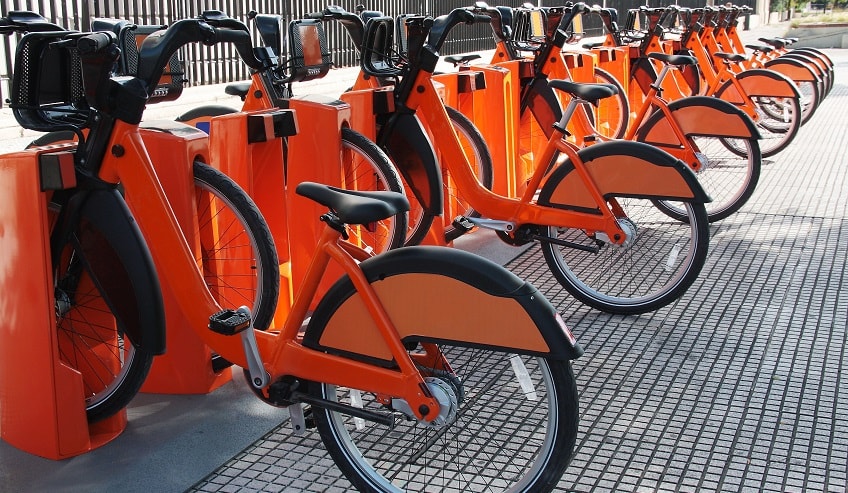
The term micro-mobility refers to smaller lightweight vehicles, including the most popular kinds, electric bikes and scooters (e-bikes and e-scooters for short). They have battery-powered motors and are available to be rented or “shared” for recreation and commuting. Most can be rented via smartphone apps and picked up at docking stations or dockless parking areas on sidewalks.
Consumer and investor demand has secured micro mobility’s place in the sharing economy for the foreseeable future. E-bikes have a projected global growth rate (CAGR) of 6.39% by 2024, and sales are expected to reach $24.3 billion by 2025. The Asia Pacific region accounted for a dominant 67.53% of the global e-bike market, and China remains the highest user and exporter of e-bikes worldwide. More and more electric vehicle manufacturers, like Giant and Trek Bikes, are expanding production to Europe and the United States. In addition, two e-scooter start-ups based in the U.S., Lime and Bird, have reached billion-dollar valuations faster than any other companies on record.
Why is Micro-Mobility a Macro Trend?
The global rise of micro-mobility, especially the use of e-bikes and e-scooters, starts with increasing demand for eco-friendly modes of transportation in populous places. Consumer studies show that the protection of our environment for future generations is critically important to consumers. E-bikes and e-scooters present an exciting alternative to fossil fuel vehicles because they offer zero carbon emissions and minimal noise pollution.
Rapid urbanization in megacities worldwide also has led to increased pollution and traffic congestion, which means higher carbon emissions, rising fuel costs and frequent rush hour gridlocks. It's a problem for commuters as well as city governments. Smaller electric or pedal-operated modes of transit are easy-to-use and can help alleviate traffic jams.
Another factor is the shifting demand for transportation that fits with the active lifestyles of younger generations. Energy-efficient and cost-effective, hopping on e-scooters or e-bikes for work or play is popular for Millennial and Gen Z consumers. Their focus on fitness is a significant reason micro-mobility is taking off. The recent addition of on-vehicle storage on e-bikes can make commuting even more convenient, particularly for city dwellers. Electric pedal-assisted bikes also offer recreational or commuting alternatives for older, active consumers including baby boomers.
Ongoing Challenges Faced by the Industry
To keep climbing at its current global rate, micro-mobility must address several challenges, including rider safety and vehicle performance. Ensuring rider safety and preventing injury is critical, and governments in China, India and Singapore have created optimum environments for e-scooters and e-bikes by designating lanes for riders on busy streets. More countries are expected to follow suit soon. Rising recall incidents for electric bikes and maintenance or battery replacement costs for e-scooters could also hamper long-term growth.
Many larger micro-mobility companies have been working with cities to address safety and security concerns by using electronic geo-zones to prevent riders from either riding in an unsafe area or parking in an area where a city doesn’t want them to park (this also could be used to prevent people from riding on sidewalks). E-scooter companies require riders to be 18 years or older and with a valid driver's license scanned before you can open an account.
What Does the Future Hold?
While flying bicycles or underwater scooters might be a stretch, there are many exciting advances on the horizon for micro-mobility. Electric bike and scooter manufacturers are focused on enhancing the user experience by integrating the vehicle with a user’s smartphone. This technology would provide the user with real-time information about things like location, speed and battery status. Sleek and lightweight bike and scooter designs are influencing manufacturers. And, battery-life technology, including a major focus on developing inexpensive, recyclable lead-acid batteries that extend the ride time of an e-vehicle, will make a significant impact on the market in the coming years.
As rideable electric technology evolves, H.B. Fuller continues to provide solutions that meet shifting market demands, specifically when it comes to the latest in battery design and installation for electric vehicles. Learn more about our complete portfolio of lightweight, thermally-conductive and high-performing adhesives.
H.B. Fuller is ready to help you solve your adhesive and sealant challenges today.
The term micro-mobility refers to smaller lightweight vehicles, including the most popular kinds, electric bikes and scooters (e-bikes and e-scooters for short). They have battery-powered motors and are available to be rented or “shared” for recreation and commuting. Most can be rented via smartphone apps and picked up at docking stations or dockless parking areas on sidewalks.
Consumer and investor demand has secured micro mobility’s place in the sharing economy for the foreseeable future. E-bikes have a projected global growth rate (CAGR) of 6.39% by 2024, and sales are expected to reach $24.3 billion by 2025. The Asia Pacific region accounted for a dominant 67.53% of the global e-bike market, and China remains the highest user and exporter of e-bikes worldwide. More and more electric vehicle manufacturers, like Giant and Trek Bikes, are expanding production to Europe and the United States. In addition, two e-scooter start-ups based in the U.S., Lime and Bird, have reached billion-dollar valuations faster than any other companies on record.
Why is Micro-Mobility a Macro Trend?
The global rise of micro-mobility, especially the use of e-bikes and e-scooters, starts with increasing demand for eco-friendly modes of transportation in populous places. Consumer studies show that the protection of our environment for future generations is critically important to consumers. E-bikes and e-scooters present an exciting alternative to fossil fuel vehicles because they offer zero carbon emissions and minimal noise pollution.
Rapid urbanization in megacities worldwide also has led to increased pollution and traffic congestion, which means higher carbon emissions, rising fuel costs and frequent rush hour gridlocks. It's a problem for commuters as well as city governments. Smaller electric or pedal-operated modes of transit are easy-to-use and can help alleviate traffic jams.
Another factor is the shifting demand for transportation that fits with the active lifestyles of younger generations. Energy-efficient and cost-effective, hopping on e-scooters or e-bikes for work or play is popular for Millennial and Gen Z consumers. Their focus on fitness is a significant reason micro-mobility is taking off. The recent addition of on-vehicle storage on e-bikes can make commuting even more convenient, particularly for city dwellers. Electric pedal-assisted bikes also offer recreational or commuting alternatives for older, active consumers including baby boomers.
Ongoing Challenges Faced by the Industry
To keep climbing at its current global rate, micro-mobility must address several challenges, including rider safety and vehicle performance. Ensuring rider safety and preventing injury is critical, and governments in China, India and Singapore have created optimum environments for e-scooters and e-bikes by designating lanes for riders on busy streets. More countries are expected to follow suit soon. Rising recall incidents for electric bikes and maintenance or battery replacement costs for e-scooters could also hamper long-term growth.
Many larger micro-mobility companies have been working with cities to address safety and security concerns by using electronic geo-zones to prevent riders from either riding in an unsafe area or parking in an area where a city doesn’t want them to park (this also could be used to prevent people from riding on sidewalks). E-scooter companies require riders to be 18 years or older and with a valid driver's license scanned before you can open an account.
What Does the Future Hold?
While flying bicycles or underwater scooters might be a stretch, there are many exciting advances on the horizon for micro-mobility. Electric bike and scooter manufacturers are focused on enhancing the user experience by integrating the vehicle with a user’s smartphone. This technology would provide the user with real-time information about things like location, speed and battery status. Sleek and lightweight bike and scooter designs are influencing manufacturers. And, battery-life technology, including a major focus on developing inexpensive, recyclable lead-acid batteries that extend the ride time of an e-vehicle, will make a significant impact on the market in the coming years.
As rideable electric technology evolves, H.B. Fuller continues to provide solutions that meet shifting market demands, specifically when it comes to the latest in battery design and installation for electric vehicles. Learn more about our complete portfolio of lightweight, thermally-conductive and high-performing adhesives.
H.B. Fuller is ready to help you solve your adhesive and sealant challenges today.
Blog Categories
Blog Categories
Archive
-
2026
-
January (5)
- Elevating Performance: How H.B. Fuller Powers the Future of Elevator Manufacturing
- Navigating EPR Legislation in the U.S.: How Adhesives and Packaging Can Meet Regulations
- Powering the Future: The Growth of New Energy Storage
- Setting the Record Straight: Why Roof Coatings Are a System, Not a Shortcut
- Strategic Partnerships are Reshaping Roofing Distribution—Here’s How H.B. Fuller Helps you Stay Ahead
- February (5)
-
March (5)
- Adhesives and Recyclability: Why They Matter
- Flexible Packaging Trends for 2026: From Momentum to Maturity
- Recycling Day: How Innovation and Responsibility Are Transforming the Future of Materials
- Why RRO Expertise Matters in Delivering Better Roofing Solutions
- Winter Tips for Using Roofing Adhesives
-
April (6)
- From Steam to Sustainable
- How Minnesota is Advancing H.B. Fuller’s Next Chapter of Global Growth
- How Spray Applied Canister Adhesives Help Roofing Contractors Overcome Global Labor Shortages
- Luxury Yacht Trends Meet Advanced Bonding Technologies
- More Than a Sealer: Introducing Lash Fuser Smart Bonding Technology
- Navigating Packaging Trends and Challenges: Advantra® Earthic™ 9500 as the Game-Changing Solution
-
May (5)
- A Buyer’s Guide to Flame-Retardant Foams
- ASC 2026 Insights: Sustainable Adhesives & Award Winning Innovation
- New Partners and Superstar Volunteers—See How H.B. Fuller is Making an Impact
- Sesame® Handle System: A Gripping New Product Years in the Making
- The Growing Importance of Masking Tapes Across Industries and How Gel-Tac™ Masking Delivers Reliable Results
- June (4)
- July (2)
-
August (6)
- Choosing the Right Adhesive: Electronic Applications
- How Adhesives and Sealants are Used in Glass Windows
- Choosing the Right Adhesives for Packaging Applications
- H.B. Fuller Company Foundation Announces First Global Grantmaking Partners
- RV Industry Trends 2026: Meeting Manufacturing Challenges with Adhesive & Sealant Technology
- What We Learned About Gen Z Beauty Buying Behavior
-
September (7)
- A Guide to Bonding Agents
- From Design to Recycling: How Adhesives Impact Paper and Board Packaging
- H.B. Fuller’s R&D Research Fellowship Driving Innovation and Business Impact
- 6 Best Practices for Engineered Wood Manufacturing
- Three Ways to Ensure Beauty Adhesives Meet Safety Standards
- Understanding DIY Lash Adhesive Ingredients: What's Really Behind the INCI List?
- Vacuum Infusion: The Critical Role of Sealing, Material Positioning and Process Reliability
-
October (7)
- Advancing Sustainable Packaging Through Standards and Policy in North America
- How Beverage Brands Are Reducing Plastic with Smarter Multipack Solutions
- Leading Through Innovation: How Huhtamaki and Bin Dasmal Group Are Creating Solutions for Tomorrow
- Navigating EPR Legislation in the U.S.: What Producers and Packaging Partners Need to Know
- RV Industry Trends Report
- The Rise of DIY Beauty: What Brands Need to Know
- When Vapor Barrier Performance Matters: Protecting Insulated Systems from Moisture Intrusion
-
January (5)
-
2025
- January (4)
- February (5)
-
March (5)
- Celebrating Women in Science on International Women’s Day
- Choosing the Right Adhesives and Sealants for Automotive Applications
- Debonding on Demand in Electric Vehicle Batteries: The Future of Efficient Recycling and Reuse
- Domestic Production & Tax Credits: The IRA’s Impact on Solar Manufacturing
- Why We Say Cosmetic Adhesives – The Science Behind Beauty Formulations
- April (2)
-
May (7)
- Auto Dilution System (ADS) for Enhanced Performance in Tissue and Towel Manufacturing
- Beauty Adhesives in Europe
- Benefits of Using Thermally Conductive Adhesives and Encapsulants in Li-Ion Batteries
- Innovation Through Collaboration: H.B. Fuller’s Customer Innovation Awards Winners
- H.B. Fuller Expands Manufacturing Capabilities in IMEA Region
- Talking Beauty Chemistry - How to Simplify and Communicate
- Top Consumer Trends Shaping the Tissue and Towel Product Market
- June (4)
-
July (9)
- Barrier Coatings for Paper-Based Food Packaging: A Guide to Compliance and Performance
- Can Lash Adhesives Work in Low Humidity
- Choosing the Right Adhesive: Hygiene
- H.B. Fuller Advances Commercial Roofing with Millennium PG-1 EF ECO₂
- How Advanced Adhesives Help Companies Thrive In The Circular Economy
- How Innovative Adhesive Technology and Manufacturing Practices Drive Sustainability
- Label Adhesives at a Crossroads: Meeting the Demands of a Sustainable, High-Performance Future
- Smarter Bonding as a Secret Weapon for Improving Industrial Assembly
- Stick Smart: Why Clean Removal and Easy Adhesion Matter in DIY Wall Décor
- August (3)
- September (3)
-
October (6)
- 2025 Global Trends in the Disposable Hygiene Industry
- Launching Fuller Impact: A New Era in Supporting Global Communities
- Lightweight Adhesives for EV Manufacturing: Reducing Weight, Improving Range
- Make a Difference 2025
- The Hidden Expense of Low-Cost Butyl
- The Role of Adhesives in Next-Gen Renewable Energy Storage Solutions
-
November (6)
- From Solar Panels to Recycled Water: Driving Sustainability and Business Impact in Colombia
- Electrifying the Future: 2026 Trends in Bus Manufacturing and H.B. Fuller’s Role in Sustainable Innovation
- Engineered Wood Adhesives Guide
- India’s Two- and Three-Wheeler Market: Accelerating Toward an Electric Future
- Three Emerging Trends in the Water-based Polymers Industry
- Where Science Meets Skin: H.B. Fuller Powers STEM Learning at the Science Museum of Minnesota
- December (2)
-
2024
- January (1)
- March (1)
- April (1)
- May (2)
- June (2)
-
July (5)
- Emerging Trends in Commercial Roofing and the Pivotal Role of Adhesives
- How Adhesives Advance Eco-Friendly Food Packaging
- How to Build the Beauty Brand of Your Dreams
- Sustainability Terminologies: A Journey Into the Words that Define Environmental Impact
- The Power of Silicone Adhesives and Sealants in Solar Panel Applications
- August (4)
- September (4)
- October (1)
- November (4)
- December (4)
- 2023
-
2022
- February (4)
- March (3)
- April (1)
- May (2)
- June (4)
-
August (6)
- Beverage Labeling Market in Africa: Key Trends, Opportunities, and Innovations
- H.B. Fuller’s Glue House: Scavenger Hunt
- Increasing Global Aging Population: Impacts and Challenges
- Innovations and Key Challenges in Sustainable Disposable Absorbent Hygiene Products
- Supporting Racial Equity in Our Community
- Top 5 Reasons to Invest in H.B. Fuller
- September (4)
- November (2)
- December (2)