


The Glue Talk Blog
Automotive electrification has several key challenges, however, thermal management and the safety of the battery pack are two larger challenges that remain a continued focus. Battery cell makers and assemblers, system designers, tier suppliers, and OEMs need a complete battery solution that addresses key thermal management and safety elements.
Addressing fire prevention and safety for occupants and first responders in the event of an accident is critical when designing improved battery stability. H.B. Fuller is investing in innovative solutions for the design and assembly of electric vehicle (EV) applications and is dedicated to helping make electric vehicles a safe transportation option without sacrificing performance or raising costs.
Flame-retardant Thermal Insulation
EV Protect 4006 is flame-retardant, low-density polyurethane foam that provides thermal insulation to EV battery cells. Lithium-ion or Li-ion cells require constant temperature control from the beginning of life (BoL) to the end of life (EoL) to ensure peak performance as well as cycle and calendar life. The excellent insulating properties are a combined result of a fine, closed-cell foam structure and cell gases that resist heat transfer. The foam helps maintain a more uniform temperature gradient due to its insulating properties. This provides a more stable temperature in the battery pack.
If a cell shorts or multiple cells short, EV Protect 4006 helps absorb the energy from the initial explosion to prevent additional physical damage to the module and remaining cells. The strong charred layer creates a barrier when it comes in contact with heat or flames. This layer stops oxygen from getting to the fresh material to prevent continued burning. The thermal barrier also helps keep the heat away from adjacent cells to prevent or delay additional cells from igniting in a cascading effect commonly known as thermal propagation.
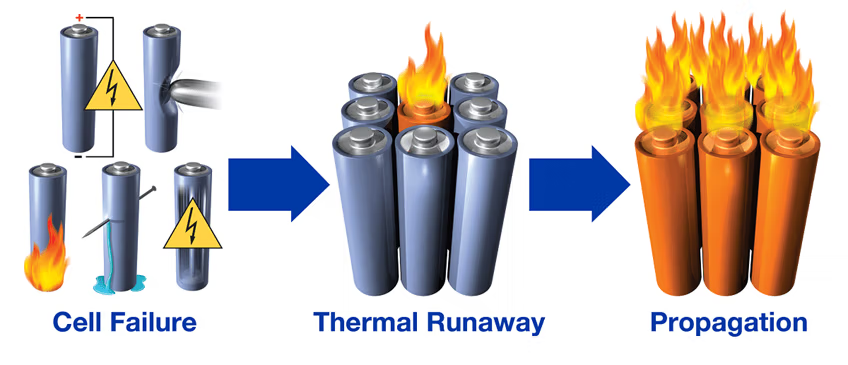
Thermal Management of EV Battery Packs
Continuous glowing combustion is a self-propagating combustion process without flaming that may occur inside certain porous materials. EV Protect 4006 does not initiate continuous glowing or propagate fire. Independent laboratory testing results have confirmed the impact EV Protect 4006 has on thermal management. It conforms to flammability requirements of UL94 Flammability of Plastic Materials of V0 and HBF. Swift®bond does not outgas flammable hydrogen during cure, meaning carbon dioxide is released, which is commonly used to extinguish electrical fires.
We continually look for opportunities to collaborate with our customers to improve the reliability and safety of battery packs and management systems. Stop by and visit with our experts in Booth 2833 at The Battery Show in Novi on September 10-12 to learn more about our adhesive technology for Electric Vehicles.
Blog Categories
Blog Categories
Archive
-
2026
-
January (5)
- Elevating Performance: How H.B. Fuller Powers the Future of Elevator Manufacturing
- Navigating EPR Legislation in the U.S.: How Adhesives and Packaging Can Meet Regulations
- Powering the Future: The Growth of New Energy Storage
- Setting the Record Straight: Why Roof Coatings Are a System, Not a Shortcut
- Strategic Partnerships are Reshaping Roofing Distribution—Here’s How H.B. Fuller Helps you Stay Ahead
- February (5)
-
March (5)
- Adhesives and Recyclability: Why They Matter
- Flexible Packaging Trends for 2026: From Momentum to Maturity
- Recycling Day: How Innovation and Responsibility Are Transforming the Future of Materials
- Why RRO Expertise Matters in Delivering Better Roofing Solutions
- Winter Tips for Using Roofing Adhesives
-
April (6)
- From Steam to Sustainable
- How Minnesota is Advancing H.B. Fuller’s Next Chapter of Global Growth
- How Spray Applied Canister Adhesives Help Roofing Contractors Overcome Global Labor Shortages
- Luxury Yacht Trends Meet Advanced Bonding Technologies
- More Than a Sealer: Introducing Lash Fuser Smart Bonding Technology
- Navigating Packaging Trends and Challenges: Advantra® Earthic™ 9500 as the Game-Changing Solution
-
May (5)
- A Buyer’s Guide to Flame-Retardant Foams
- ASC 2026 Insights: Sustainable Adhesives & Award Winning Innovation
- New Partners and Superstar Volunteers—See How H.B. Fuller is Making an Impact
- Sesame® Handle System: A Gripping New Product Years in the Making
- The Growing Importance of Masking Tapes Across Industries and How Gel-Tac™ Masking Delivers Reliable Results
- June (4)
- July (2)
-
August (6)
- Choosing the Right Adhesive: Electronic Applications
- How Adhesives and Sealants are Used in Glass Windows
- Choosing the Right Adhesives for Packaging Applications
- H.B. Fuller Company Foundation Announces First Global Grantmaking Partners
- RV Industry Trends 2026: Meeting Manufacturing Challenges with Adhesive & Sealant Technology
- What We Learned About Gen Z Beauty Buying Behavior
-
September (7)
- A Guide to Bonding Agents
- From Design to Recycling: How Adhesives Impact Paper and Board Packaging
- H.B. Fuller’s R&D Research Fellowship Driving Innovation and Business Impact
- 6 Best Practices for Engineered Wood Manufacturing
- Three Ways to Ensure Beauty Adhesives Meet Safety Standards
- Understanding DIY Lash Adhesive Ingredients: What's Really Behind the INCI List?
- Vacuum Infusion: The Critical Role of Sealing, Material Positioning and Process Reliability
-
October (4)
- How Beverage Brands Are Reducing Plastic with Smarter Multipack Solutions
- Leading Through Innovation: How Huhtamaki and Bin Dasmal Group Are Creating Solutions for Tomorrow
- Navigating EPR Legislation in the U.S.: What Producers and Packaging Partners Need to Know
- When Vapor Barrier Performance Matters: Protecting Insulated Systems from Moisture Intrusion
-
January (5)
-
2025
- January (4)
- February (5)
-
March (5)
- Celebrating Women in Science on International Women’s Day
- Choosing the Right Adhesives and Sealants for Automotive Applications
- Debonding on Demand in Electric Vehicle Batteries: The Future of Efficient Recycling and Reuse
- Domestic Production & Tax Credits: The IRA’s Impact on Solar Manufacturing
- Why We Say Cosmetic Adhesives – The Science Behind Beauty Formulations
- April (2)
-
May (7)
- Auto Dilution System (ADS) for Enhanced Performance in Tissue and Towel Manufacturing
- Beauty Adhesives in Europe
- Benefits of Using Thermally Conductive Adhesives and Encapsulants in Li-Ion Batteries
- Innovation Through Collaboration: H.B. Fuller’s Customer Innovation Awards Winners
- H.B. Fuller Expands Manufacturing Capabilities in IMEA Region
- Talking Beauty Chemistry - How to Simplify and Communicate
- Top Consumer Trends Shaping the Tissue and Towel Product Market
- June (4)
-
July (9)
- Barrier Coatings for Paper-Based Food Packaging: A Guide to Compliance and Performance
- Can Lash Adhesives Work in Low Humidity
- Choosing the Right Adhesive: Hygiene
- H.B. Fuller Advances Commercial Roofing with Millennium PG-1 EF ECO₂
- How Advanced Adhesives Help Companies Thrive In The Circular Economy
- How Innovative Adhesive Technology and Manufacturing Practices Drive Sustainability
- Label Adhesives at a Crossroads: Meeting the Demands of a Sustainable, High-Performance Future
- Smarter Bonding as a Secret Weapon for Improving Industrial Assembly
- Stick Smart: Why Clean Removal and Easy Adhesion Matter in DIY Wall Décor
- August (3)
- September (3)
-
October (6)
- 2025 Global Trends in the Disposable Hygiene Industry
- Launching Fuller Impact: A New Era in Supporting Global Communities
- Lightweight Adhesives for EV Manufacturing: Reducing Weight, Improving Range
- Make a Difference 2025
- The Hidden Expense of Low-Cost Butyl
- The Role of Adhesives in Next-Gen Renewable Energy Storage Solutions
-
November (6)
- From Solar Panels to Recycled Water: Driving Sustainability and Business Impact in Colombia
- Electrifying the Future: 2026 Trends in Bus Manufacturing and H.B. Fuller’s Role in Sustainable Innovation
- Engineered Wood Adhesives Guide
- India’s Two- and Three-Wheeler Market: Accelerating Toward an Electric Future
- Three Emerging Trends in the Water-based Polymers Industry
- Where Science Meets Skin: H.B. Fuller Powers STEM Learning at the Science Museum of Minnesota
- December (2)
-
2024
- January (1)
- March (1)
- April (1)
- May (2)
- June (2)
-
July (5)
- Emerging Trends in Commercial Roofing and the Pivotal Role of Adhesives
- How Adhesives Advance Eco-Friendly Food Packaging
- How to Build the Beauty Brand of Your Dreams
- Sustainability Terminologies: A Journey Into the Words that Define Environmental Impact
- The Power of Silicone Adhesives and Sealants in Solar Panel Applications
- August (4)
- September (4)
- October (1)
- November (4)
- December (4)
- 2023
-
2022
- February (4)
- March (3)
- April (1)
- May (2)
- June (4)
-
August (6)
- Beverage Labeling Market in Africa: Key Trends, Opportunities, and Innovations
- H.B. Fuller’s Glue House: Scavenger Hunt
- Increasing Global Aging Population: Impacts and Challenges
- Innovations and Key Challenges in Sustainable Disposable Absorbent Hygiene Products
- Supporting Racial Equity in Our Community
- Top 5 Reasons to Invest in H.B. Fuller
- September (4)
- November (2)
- December (2)