

The Glue Talk Blog
Selecting the right labeling adhesive can increase container recyclability and re-use, as well as giving you a competitive advantage. Read on for my explanation of the labeling industry’s stand point on sustainability and how we are supporting the vision of a circular economy.
Reason 1: Recyclability
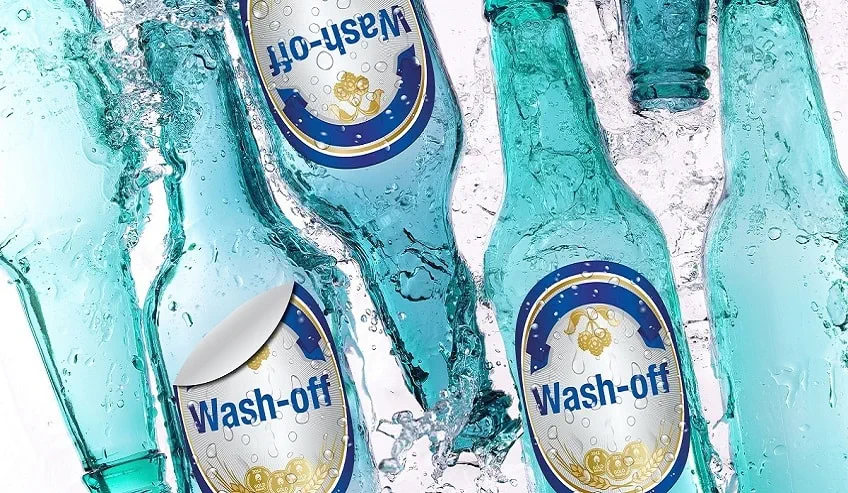
Our Fulltak™ SE 8301 is a high-performance, water-based, acrylic adhesive for alkali-strippable PSA paper labeling applications. It is ideal for recyclable bottles that require ice water resistance (IWR), followed by label removal in alkali wash-off operations. The range now includes a lower viscosity option for gravure coating machines. Fulltak™ SE 8301 is APEO-free and is designed for both paper and filmic labels with special film constructions, like shrinkables or perforated, which is a strong advantage as these are becoming increasingly popular.
Reason 2: Re-usability
Of course, it’s not just the beverage industry – labels are everywhere. Take, for instance, the containers used for supermarket meat and fruit. These trays often hold a paper logistics label, which must come off before the tray can be re-used. Often, the trays are cleaned only with water so it’s important that the label is produced with a wash-off adhesive. Our Fulltak™ SE 8302 and 8303 are established grades for cold water wash-off from a wide range of substrates, including glass and plastics. This reduces contamination and consumption of wash water as the adhesive remains attached to the label. New additions to this range are our APEO-free, low and high viscosity versions: TS 2815 and TS 2816.
Reason 3: Competitive advantage
Sustainability is an integral part of business strategy. Consumers are actively looking for information on how packaging supports recycling initiatives when selecting goods on the shelf or online. By using our extended and modernized product range for both alkali wash-off and cold water wash-off, you can increase your competitive advantage by proving your commitment to the circular economy.
Alkali vs. cold water wash off
The adhesive used will depend on the conditions the container will be exposed to. Continuing our example above, a beer bottle is often stored in refrigerated or iced water conditions. Once it’s taken out, the bottle is exposed to higher, ambient temperatures and condensation, both of which are a challenge for label adhesion. As a result, manufacturers have two choices:
1. A permanent adhesive, which hold labels in place firmly but can cause issues in recycling processes.
2. A peelable adhesive, which provides a lower environmental profile but risks labels coming off during refrigeration.
When it comes to removing the label, the wash-off process will depend on the chosen adhesive as some are removable with cold water and others in an alkali solution. In an ideal world, the adhesive would have ice water resistance and be simple to wash off.
Bearing all this in mind, here are my three reasons to make label wash-off a priority, and how connecting with the right adhesive expertise can make all the difference.
Reduce, re-use, recycle
Since the 1970s, one of the main approaches to sustainable development has been the circular economy. According to the Ellen MacArthur Foundation, there are three elements to this concept: design out waste and pollution, keep products and materials in use, and regenerate natural systems.
FEICA (The Association of the European Adhesive & Sealant Industry), of which we are an active member, is very much aligned with this point of view. They state that adhesives and sealants play an important role in the recycling and reuse of many products. And, this is something the labeling industry needs to think about.
As you know, almost all of the products we consume are labeled to provide information and guarantee consumer safety. For recycling, it’s important to differentiate between the individual elements of these products. In a plastic bottle, for example, the PET of the container needs to follow a separate recycling process to the paper or polypropylene label. Usually labels are incinerated or sent to landfill, but with the label removed, the container itself can be recycled, contributing to the circular economy.
Partner with us
Labels feature on virtually every consumer product, so it’s vital we give them the attention they deserve. Complex materials demand innovative adhesive solutions and by partnering with us you access solutions developed specially for a products’ entire life cycle.
Want to find out more? Contact us and we’d be happy to help.Blog Categories
Blog Categories
Archive
-
2026
-
January (5)
- Elevating Performance: How H.B. Fuller Powers the Future of Elevator Manufacturing
- Navigating EPR Legislation in the U.S.: How Adhesives and Packaging Can Meet Regulations
- Powering the Future: The Growth of New Energy Storage
- Setting the Record Straight: Why Roof Coatings Are a System, Not a Shortcut
- Strategic Partnerships are Reshaping Roofing Distribution—Here’s How H.B. Fuller Helps you Stay Ahead
- February (5)
-
March (5)
- Adhesives and Recyclability: Why They Matter
- Flexible Packaging Trends for 2026: From Momentum to Maturity
- Recycling Day: How Innovation and Responsibility Are Transforming the Future of Materials
- Why RRO Expertise Matters in Delivering Better Roofing Solutions
- Winter Tips for Using Roofing Adhesives
-
April (6)
- From Steam to Sustainable
- How Minnesota is Advancing H.B. Fuller’s Next Chapter of Global Growth
- How Spray Applied Canister Adhesives Help Roofing Contractors Overcome Global Labor Shortages
- Luxury Yacht Trends Meet Advanced Bonding Technologies
- More Than a Sealer: Introducing Lash Fuser Smart Bonding Technology
- Navigating Packaging Trends and Challenges: Advantra® Earthic™ 9500 as the Game-Changing Solution
-
May (5)
- A Buyer’s Guide to Flame-Retardant Foams
- ASC 2026 Insights: Sustainable Adhesives & Award Winning Innovation
- New Partners and Superstar Volunteers—See How H.B. Fuller is Making an Impact
- Sesame® Handle System: A Gripping New Product Years in the Making
- The Growing Importance of Masking Tapes Across Industries and How Gel-Tac™ Masking Delivers Reliable Results
- June (4)
- July (2)
-
August (6)
- Choosing the Right Adhesive: Electronic Applications
- How Adhesives and Sealants are Used in Glass Windows
- Choosing the Right Adhesives for Packaging Applications
- H.B. Fuller Company Foundation Announces First Global Grantmaking Partners
- RV Industry Trends 2026: Meeting Manufacturing Challenges with Adhesive & Sealant Technology
- What We Learned About Gen Z Beauty Buying Behavior
-
September (7)
- A Guide to Bonding Agents
- From Design to Recycling: How Adhesives Impact Paper and Board Packaging
- H.B. Fuller’s R&D Research Fellowship Driving Innovation and Business Impact
- 6 Best Practices for Engineered Wood Manufacturing
- Three Ways to Ensure Beauty Adhesives Meet Safety Standards
- Understanding DIY Lash Adhesive Ingredients: What's Really Behind the INCI List?
- Vacuum Infusion: The Critical Role of Sealing, Material Positioning and Process Reliability
-
October (4)
- How Beverage Brands Are Reducing Plastic with Smarter Multipack Solutions
- Leading Through Innovation: How Huhtamaki and Bin Dasmal Group Are Creating Solutions for Tomorrow
- Navigating EPR Legislation in the U.S.: What Producers and Packaging Partners Need to Know
- When Vapor Barrier Performance Matters: Protecting Insulated Systems from Moisture Intrusion
-
January (5)
-
2025
- January (4)
- February (5)
-
March (5)
- Celebrating Women in Science on International Women’s Day
- Choosing the Right Adhesives and Sealants for Automotive Applications
- Debonding on Demand in Electric Vehicle Batteries: The Future of Efficient Recycling and Reuse
- Domestic Production & Tax Credits: The IRA’s Impact on Solar Manufacturing
- Why We Say Cosmetic Adhesives – The Science Behind Beauty Formulations
- April (2)
-
May (7)
- Auto Dilution System (ADS) for Enhanced Performance in Tissue and Towel Manufacturing
- Beauty Adhesives in Europe
- Benefits of Using Thermally Conductive Adhesives and Encapsulants in Li-Ion Batteries
- Innovation Through Collaboration: H.B. Fuller’s Customer Innovation Awards Winners
- H.B. Fuller Expands Manufacturing Capabilities in IMEA Region
- Talking Beauty Chemistry - How to Simplify and Communicate
- Top Consumer Trends Shaping the Tissue and Towel Product Market
- June (4)
-
July (9)
- Barrier Coatings for Paper-Based Food Packaging: A Guide to Compliance and Performance
- Can Lash Adhesives Work in Low Humidity
- Choosing the Right Adhesive: Hygiene
- H.B. Fuller Advances Commercial Roofing with Millennium PG-1 EF ECO₂
- How Advanced Adhesives Help Companies Thrive In The Circular Economy
- How Innovative Adhesive Technology and Manufacturing Practices Drive Sustainability
- Label Adhesives at a Crossroads: Meeting the Demands of a Sustainable, High-Performance Future
- Smarter Bonding as a Secret Weapon for Improving Industrial Assembly
- Stick Smart: Why Clean Removal and Easy Adhesion Matter in DIY Wall Décor
- August (3)
- September (3)
-
October (6)
- 2025 Global Trends in the Disposable Hygiene Industry
- Launching Fuller Impact: A New Era in Supporting Global Communities
- Lightweight Adhesives for EV Manufacturing: Reducing Weight, Improving Range
- Make a Difference 2025
- The Hidden Expense of Low-Cost Butyl
- The Role of Adhesives in Next-Gen Renewable Energy Storage Solutions
-
November (6)
- From Solar Panels to Recycled Water: Driving Sustainability and Business Impact in Colombia
- Electrifying the Future: 2026 Trends in Bus Manufacturing and H.B. Fuller’s Role in Sustainable Innovation
- Engineered Wood Adhesives Guide
- India’s Two- and Three-Wheeler Market: Accelerating Toward an Electric Future
- Three Emerging Trends in the Water-based Polymers Industry
- Where Science Meets Skin: H.B. Fuller Powers STEM Learning at the Science Museum of Minnesota
- December (2)
-
2024
- January (1)
- March (1)
- April (1)
- May (2)
- June (2)
-
July (5)
- Emerging Trends in Commercial Roofing and the Pivotal Role of Adhesives
- How Adhesives Advance Eco-Friendly Food Packaging
- How to Build the Beauty Brand of Your Dreams
- Sustainability Terminologies: A Journey Into the Words that Define Environmental Impact
- The Power of Silicone Adhesives and Sealants in Solar Panel Applications
- August (4)
- September (4)
- October (1)
- November (4)
- December (4)
- 2023
-
2022
- February (4)
- March (3)
- April (1)
- May (2)
- June (4)
-
August (6)
- Beverage Labeling Market in Africa: Key Trends, Opportunities, and Innovations
- H.B. Fuller’s Glue House: Scavenger Hunt
- Increasing Global Aging Population: Impacts and Challenges
- Innovations and Key Challenges in Sustainable Disposable Absorbent Hygiene Products
- Supporting Racial Equity in Our Community
- Top 5 Reasons to Invest in H.B. Fuller
- September (4)
- November (2)
- December (2)