

胶水话题博客
When discussing moisture protection in insulated systems, most attention is given to the outer layer of the insulation assembly. Vapor barriers and protective jacketing are often viewed as the primary defense against moisture intrusion.
However, in below-ambient and cryogenic applications, effective vapor control starts much deeper within the system.
Without properly designed vapor stops, moisture can migrate through insulation assemblies at transition points, creating hidden pathways for water vapor infiltration. Over time, this can reduce insulation performance, increase energy consumption, and contribute to costly system damage.
What is a Vapor Stop?
A vapor stop is an internal barrier installed within an insulation system to prevent moisture migration along pipes, vessels, or equipment operating below ambient temperatures.
While external vapor jackets protect insulation from moisture entering from the environment, vapor stops help prevent moisture from travelling through the insulation assembly itself.
They are commonly installed at:
- Insulation terminations
- System penetrations
- Valve and fitting locations
- Changes in operating temperature
- Transition points within the insulation system
These critical locations are often the most vulnerable to moisture ingress, making effective vapor stop design essential for long-term system performance.
Why Moisture Migration is a Hidden Risk
In chilled water, refrigeration, and cryogenic applications, even small amounts of moisture can have significant consequences.
When water vapor enters the insulation system and condenses, it can lead to:
- Reduced thermal efficiency
- Increased energy consumption
- Insulation degradation
- Corrosion under insulation (CUI)
- Costly maintenance and repairs
- Shortened equipment lifespan
The challenge is that moisture migration often occurs beneath the insulation surface, making it difficult to detect until performance issues become apparent.
This is why a complete moisture protection strategy must address both external vapor barriers and internal vapor stops.
The Challenges of Traditional Vapor Stop Installation
Historically, many vapor stop assemblies have relied on liquid-applied materials.
While these systems can be effective, they often require:
- Multiple application coats
- Precise film thickness control
- Cure time between layers
- Additional labor and installation time
- Favorable site conditions for proper application
These requirements can introduce variability from one installation to another. Inconsistent thickness, incomplete coverage, or application errors may create weak points that compromise long-term vapor control.
In fast-paced construction and maintenance environments, extended curing periods can also slow installation schedules and impact project timelines.
Simplifying Vapor Stop Installation
As insulation systems become more demanding, contractors are increasingly looking for solutions that provide consistent performance while reducing installation complexity.
Preformed vapor stop technologies help address many of the challenges associated with traditional liquid-applied systems by delivering controlled thickness and coverage in a single-step application.
Because performance is built into the material itself, installers can achieve more consistent results across projects while minimizing variables during application.
A Modern Approach to Vapor Stops with Cryolar™ NXT
Foster™ Cryolar™ NXT was developed to simplify vapor stop installation while delivering the high-performance vapor control required in low-temperature environments.
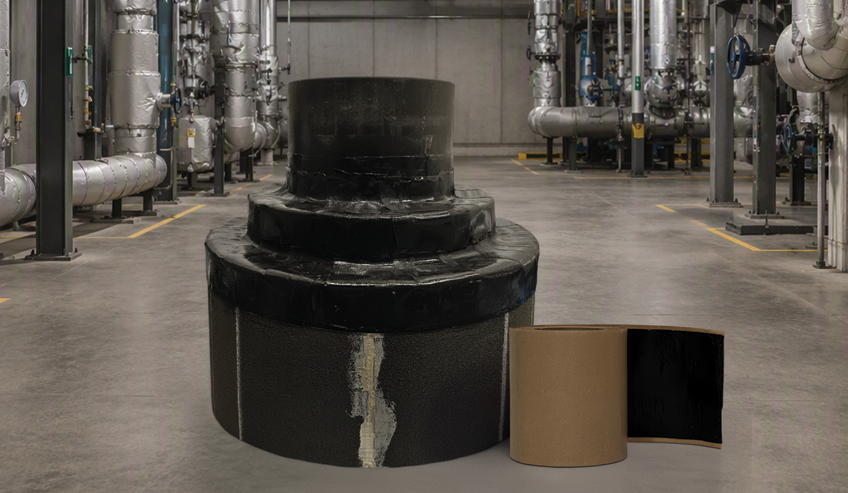
Unlike traditional liquid-applied methods, Cryolar™ NXT is a self-fusing, butyl-formulated, double-sided vapor stop tape that creates a continuous, monolithic seal within the insulation system.
Its preformed design provides consistent coverage and thickness without the need for multiple coats or extended curing periods.
Designed for Demanding Low-Temperature Applications
Low-temperature systems require materials capable of maintaining performance under challenging operating conditions.
Cryolar™ NXT delivers:
- Vapor permeance below 0.01 perms
- Service temperatures ranging from cryogenic conditions as low as -270°F to 250°F
- Self-fusing technology that creates a continuous seal
- Embedded mesh reinforcement for additional strength
- A 100% solids formulation with no cure time required
Because adjacent insulation can be installed immediately after application, contractors can maintain workflow and keep projects moving without waiting for materials to cure.
The Benefits of a Monolithic Vapor Seal
One of the key advantages of self-fusing vapor stop technology is the ability to create a continuous barrier throughout the insulation assembly.
As overlapping sections are installed, they fuse together to form a single sealing layer. This helps eliminate potential gaps, voids, or inconsistencies that can occur with layered application methods.
The result is improved protection against internal moisture migration and enhanced long-term system reliability.
This is particularly valuable in applications exposed to:
- Thermal cycling
- Extreme operating temperatures
- Continuous low-temperature service
- Mechanical stress and movement
- Long-term moisture exposure
Looking Beyond the Outer Jacket
When designing insulation systems, it is easy to focus solely on the external vapor barrier. However, long-term moisture protection requires attention to every layer of the assembly.
Vapor stops play a critical role in preventing hidden moisture migration and protecting insulation performance from within. By choosing solutions that promote consistent installation, reduce application variability, and create continuous vapor seals, contractors and specifiers can help improve the long-term reliability of low-temperature systems.
As expectations for energy efficiency, durability, and asset protection continue to increase, internal vapor control is becoming an increasingly important part of insulation system design.
Contact us for more information on our Foster™ portfolio.
博客分类
档案
- 2026
- 2025
- 2024
- 2023
- 2022