


Flame Retardant Foams

The H.B. Fuller Difference: Flame Retardancy Performance
H.B. Fuller® EV Protect™ 4006 and 5006 are both patented expanding foams that withstand UL 94 V-0 rating and withstand a torch test far beyond a comparable competitive material. Which material do you want to protect your batteries?

Foams: The "Seatbelt" of Battery Safety
Read our latest blog which offers a deep dive into lithium-ion battery fires, new regulatory actions and ways to prevent thermal propagation.
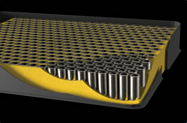
Featured Product: H.B. Fuller® EV Protect™ 5006
This flame-retardant material is designed to enhance the safety of batteries. It expands when exposed to heat, creating a protective barrier that can help prevent thermal runaway. It improves durability and reliability, enabling a safer, longer-lasting battery.
Key Benefits:
–Fast cure speed for improved cycle times
–Meets UL 94 V-0
–Low viscosity & self-leveling
Working with H.B. Fuller’s Battery Team
H.B. Fuller leverages over 130+ years of material knowledge and expertise to support the clean energy market with advanced solutions tailored for battery, energy storage, wind & solar applications. Our specialized adhesives, sealants, and thermal management materials are engineered for the unique demands of these markets, including enhanced safety, durability, and stability.
With a comprehensive understanding of materials science and industry challenges, we offer products that improve performance, streamline manufacturing, and ensure long-term reliability. By partnering with H.B. Fuller, manufacturers gain access to cutting-edge materials and expert guidance for optimized, high-quality systems in a competitive market.
- Strategic sourcing
- A team of unified R&D experts
- 10,000+ adhesives in our portfolio
- Formulated with variety of chemistries
H.B. Fuller’s clean energy team brings global expertise with a strong local focus, ensuring tailored support wherever you operate. Our network of experts understands regional market demands and compliance requirements, allowing us to deliver solutions that are both innovative and precisely adapted to local needs.
We collaborate closely with customers worldwide to provide on-the-ground insights and rapid responses, all backed by the extensive resources of a global leader. With a commitment to localized service and global knowledge, we empower our partners to succeed in diverse markets with materials that meet the highest standards of quality, safety, and performance.
H.B. Fuller offers robust technical support and testing capabilities to help customers achieve peak performance in their clean energy applications. Our dedicated technical team collaborates closely with you to understand specific challenges and optimize material solutions, ensuring they meet the highest standards.
With state-of-the-art testing partnerships and expertise in battery, energy storage, wind & solar applications, we provide insights that accelerate product development and enhance your designs. Our commitment to technical excellence means you can count on us for precise guidance and real-world testing to ensure every solution delivers exceptional results.
At H.B. Fuller, we don’t just offer off-the-shelf solutions—we take the time to understand your specific design requirements and formulate a tailored solution that precisely meets your needs. Our team collaborates closely with you, leveraging deep industry expertise and advanced R&D capabilities to create materials that enhance performance of your unique applications. From custom adhesives to specialized thermal management products, we’re committed to delivering innovative, fit-for-purpose solutions that empower you to succeed in a competitive market.
Frequently Asked Questions
-
What types of foams are used in EV battery manufacturing?
In EV battery manufacturing, commonly used foams include polyurethane expanding foams, silicone foams, and polyethylene foams. Polyurethane foams provide excellent thermal insulation, structural support, and vibration resistance, helping secure cells in place. Silicone foams offer high heat resistance and flexibility, making them ideal for thermal management and sealing applications. Polyethylene foams provide lightweight protection and cushioning, helping absorb impact and prevent damage to battery components. Each foam type serves a unique function to enhance safety, stability, and efficiency in EV battery packs.
-
Why is polyurethane foam used in EV battery packs?
Polyurethane foam is used in EV battery packs for its thermal insulation, vibration resistance, and lightweight structural support. This expanding foam fills gaps between cells, helping to stabilize them and prevent movement, which reduces the risk of damage from shocks and vibrations. It also provides a layer of thermal insulation, managing heat distribution within the battery pack to prevent overheating. Additionally, polyurethane foam is highly adaptable, allowing it to conform to complex shapes and ensure a secure seal around cells, which enhances both the durability and safety of the battery pack.
-
Which foam pads are used in EV battery packs?
In EV battery packs, polyurethane foam pads are commonly used to enhance safety, thermal management, and durability. These pads provide shock absorption, structural support, and fill gaps within the battery pack. They also help with vibration resistance, reducing cell movement during vehicle operation.
-
When would I use a polyurethane foam over other materials like adhesives or potting compounds?
Polyurethane foam is ideal over adhesives or potting compounds when lightweight gap filling, vibration resistance, and thermal insulation are key. It expands to fill spaces, offers shock absorption to protect battery cells, and provides insulation without excessive weight. Polyurethane foam is also easier to apply and remove than potting compounds, making it an excellent choice when flexibility, re-workability, and lightweight support are essential.
FAQ : Battery Encapsulation Explained
-
What is battery encapsulation?
Battery encapsulation is the process of placing a protective material around or between battery cells and other module components. The material is typically dispensed as a liquid and cured in place to form a stable structure around the components.
-
Why is encapsulation used in EV batteries?
Encapsulation can support thermal protection, electrical insulation and structural stability within an EV battery module. Depending on the material and module design, it may also help protect components from vibration, impact, moisture and other environmental exposure.
-
How does battery encapsulation work?
An encapsulant is dispensed into the spaces surrounding battery cells or components during assembly. It then cures or expands to fill the required area, helping to hold components in position and create a protective barrier within the module. The exact dispensing and curing process depends on the encapsulant chemistry and production requirements.
-
Which parts of a battery can be encapsulated?
Encapsulation is commonly used around battery cells within a module, but it may also be used for connectors, electronic assemblies and other components that require protection. The application area depends on the cell format, module architecture and required level of structural, thermal or electrical performance.
-
What role does encapsulation play during a thermal event?
A suitable encapsulant can help isolate an overheating cell and insulate adjacent cells from heat and flame. Its role is to help limit thermal propagation rather than allow a thermal event to spread freely through the module.
-
Does battery encapsulation prevent thermal runaway?
No single encapsulant can prevent every cause of thermal runaway. Encapsulation is one part of a broader battery safety and thermal-management strategy that may also include cooling systems, thermal interface materials, thermally conductive adhesives and dielectric coatings.
-
Can encapsulation provide structural support?
Yes, some encapsulants have structural or semi-structural properties that help unitize the module and hold cells in position. This can help the assembly withstand vibration, shock and other mechanical forces encountered during use.
-
How does battery encapsulation affect heat transfer?
The effect depends on the encapsulant’s thermal properties and its position within the module. Some encapsulants are designed to allow controlled thermal exchange while helping isolate an abnormal heat event. Encapsulation should therefore be evaluated as part of the complete thermal design, rather than as a standalone cooling solution.
-
Does an encapsulant provide electrical insulation?
Some battery encapsulants have dielectric properties that help electrically isolate components. However, electrical performance varies by formulation, so dielectric strength and the required insulation distance should be confirmed for the intended battery design.
-
How is an encapsulant different from a thermal interface material or adhesive?
An encapsulant generally fills a larger volume around cells or components and may provide insulation and structural support. A thermal interface material is primarily used to improve heat transfer between a heat source and a cooling surface. Structural adhesives bond components, while dielectric coatings provide a thinner layer of electrical isolation. These materials often work together within the battery pack.
-
Are battery potting and battery encapsulation the same thing?
The terms are often used together because both processes place a protective material around electrical component. In battery applications, “potting” may refer to filling a defined housing or cavity, while “encapsulation” can describe the broader process of surrounding cells or components. The terminology may vary by manufacturer and module design.
-
What materials are used for battery encapsulation?
Battery encapsulants may be based on polyurethane, epoxy, silicone or other material technologies. Each chemistry offers a different balance of density, viscosity, hardness, flame retardancy, impact resistance, processing requirements and thermal or electrical properties.
-
Why are foam encapsulants used in battery modules?
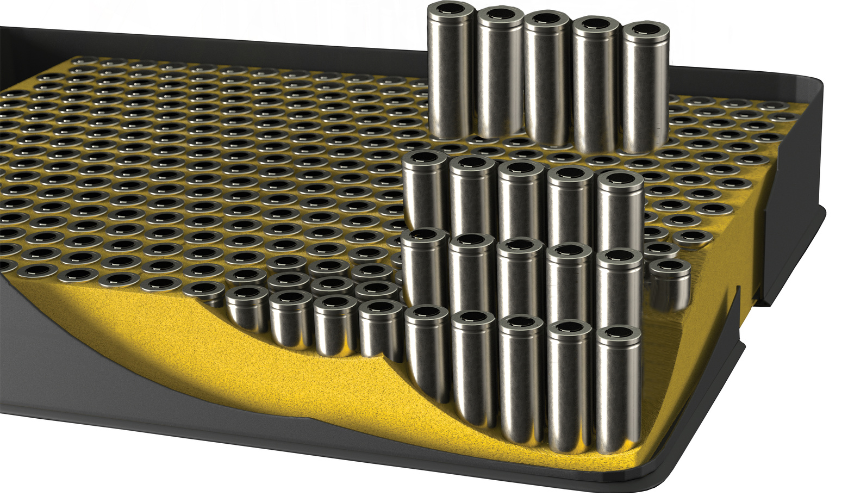
Foam encapsulants can fill space around cells while adding less mass than some solid alternatives. Certain polyurethane foams are also designed to be self-leveling, flame retardant and resistant to vibration or impact. These characteristics are formulation-specific and should be confirmed using the relevant technical data.
-
What properties should engineers consider when selecting an encapsulant?
Selection should consider the complete module design. Important factors may include:
- Flame-retardancy requirements
- Density and added module weight
- Viscosity and flow during dispensing
- Expansion and cure behaviour
- Hardness and compression modulus
- Electrical insulation
- Thermal performance
- Impact and vibration resistance
- Outgassing and exotherm
- Compatibility with cells, substrates and manufacturing equipment
Final suitability should be established through application-specific testing.
-
What battery encapsulation solutions does H.B. Fuller offer?
H.B. Fuller’s EV Protect portfolio includes liquid-applied, two-component polyurethane foam encapsulants for battery cells and modules. Available formulations provide different hardness and compression-modulus profiles, allowing engineers to evaluate options against their structural, processing and protection requirements. Product selection should be based on the intended design, production process and validation testing.

Request A Quote For Your Next Project
View Related Pages
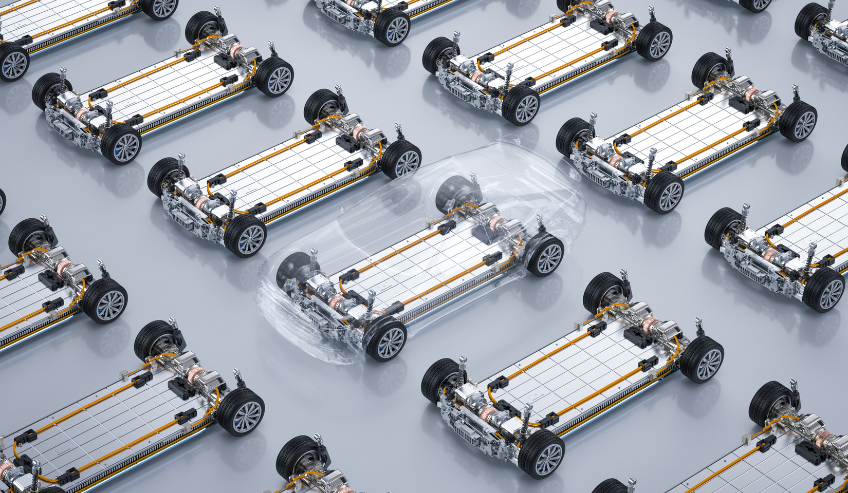 Flame-Retardant Foams: The "Seatbelt" of Battery Safety
 Battery Trends of 2025: What’s Powering the Future of Energy?
The electric vehicle (EV) revolution is well underway. In recent years, EVs have moved from niche market disruptors to mainstream transportation options, with global automakers making substantial investments in electrification. As the adoption of electric mobility accelerates, the focus is shifting from early-stage transformation to fine-tuning the technologies that will shape the next generation of batteries.
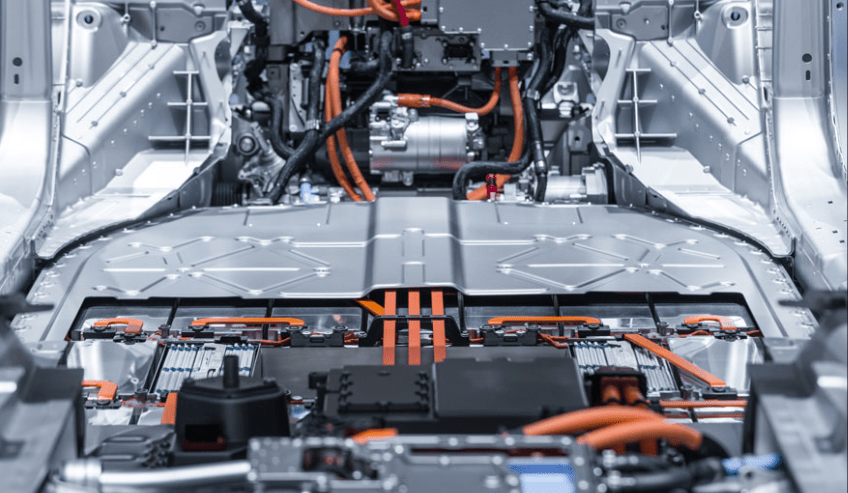 The Importance of Comprehensive Thermal Management in Electric Vehicle Battery Systems
Effective thermal management is crucial for EV battery systems, which use lithium-ion cells for high energy density, long life cycles, and fast charging.