

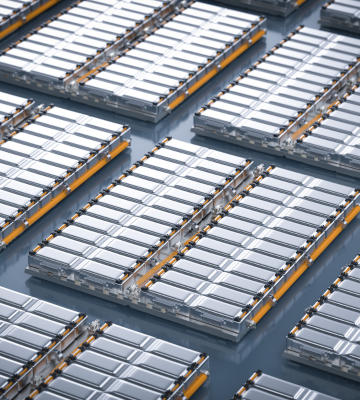
Batteries
High-Performance Materials for Lithium-ion Batteries
The lithium-ion battery market is rapidly evolving, and high-performance materials play a critical role in meeting safety, efficiency, and performance demands. No two battery designs are alike - from cell chemistry to format, battery manufacturers and OEMs need materials specifically formulation for the unique needs of the market. Our portfolio of clean energy solutions includes adhesives, flame retardant foams, thermal interface materials and coatings that help prevent battery fires, enable lighter weight assembly and maximize energy efficiency.
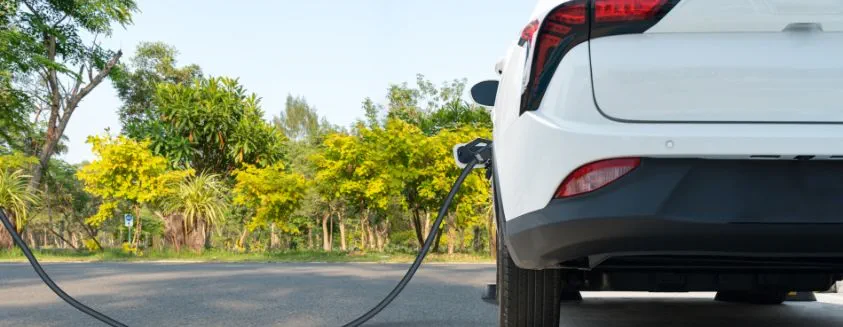

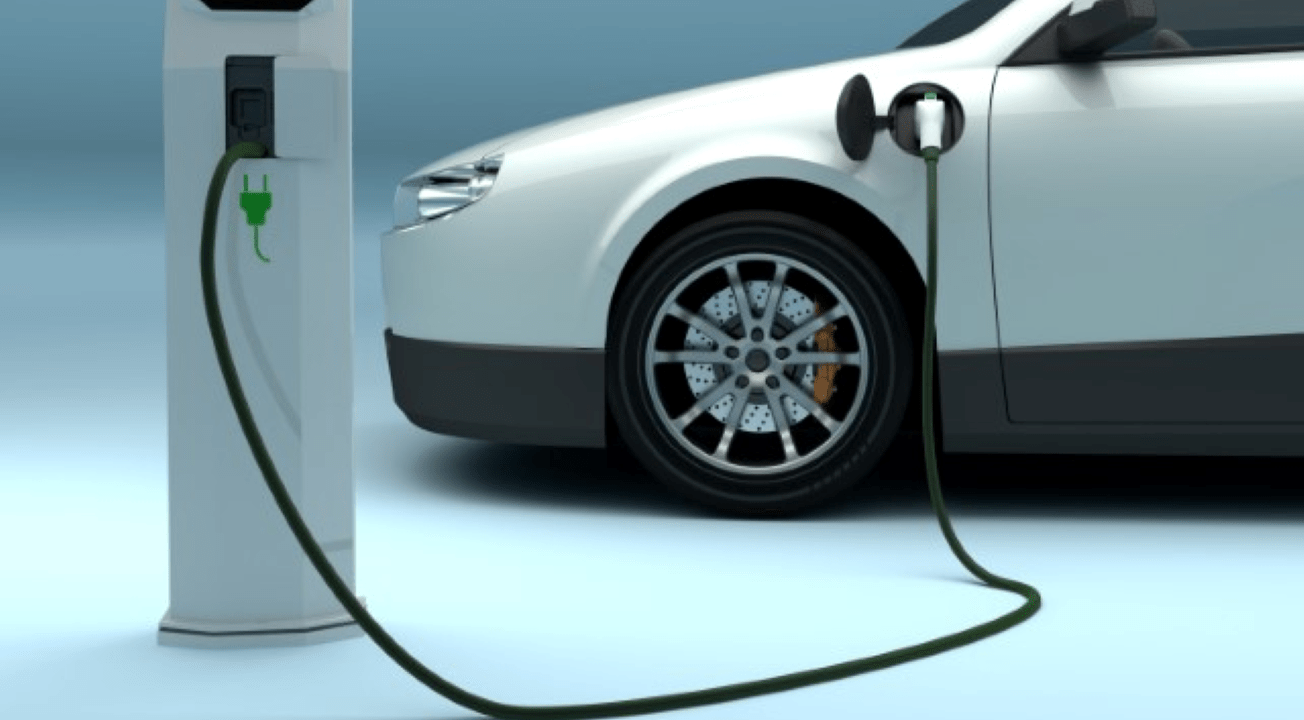
Battery Solutions for Passenger Electric Vehicles
As EV adoption continues to accelerate, the search for innovative solutions to complex battery challenges is stronger than ever. Our materials for EV batteries support enhanced safety, efficiency, and durability, enabling manufacturers to meet today’s rigorous standards and power the future of transportation.
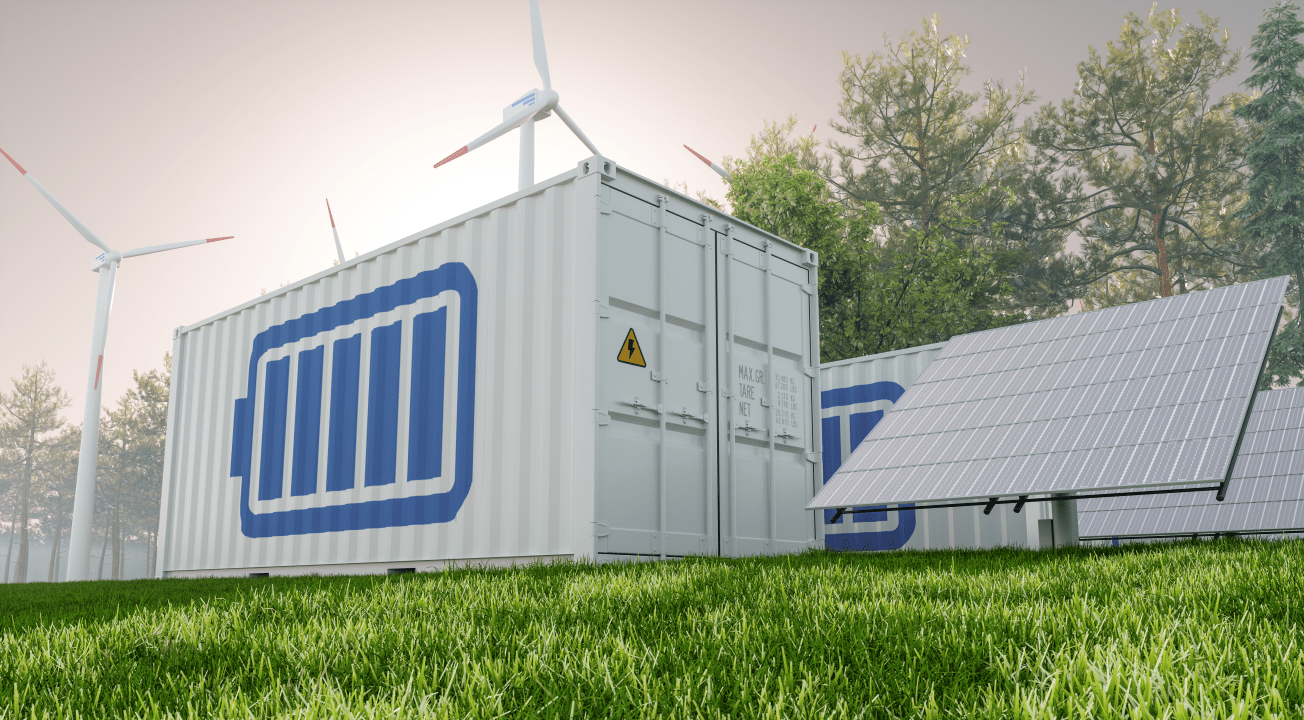
Materials for Energy Storage Systems
Energy storage is essential for a reliable, sustainable energy system. It enables storage of excess energy from renewable sources like solar and wind for use during times when generation is low, making power more consistent and reducing reliance on fossil fuels. Powered by batteries, the same design challenges apply to energy storage as they do passenger vehicles.

Battery Materials for eVTOL and Electric Aerospace
Advanced aircraft powered by electric propulsion are designed to be quieter, more efficient and environmentally friendly. Electric vertical takeoff and landing will change urban air mobility in the near future. The batteries powering these systems require light-weight materials that enable safer and higher-powered machines.
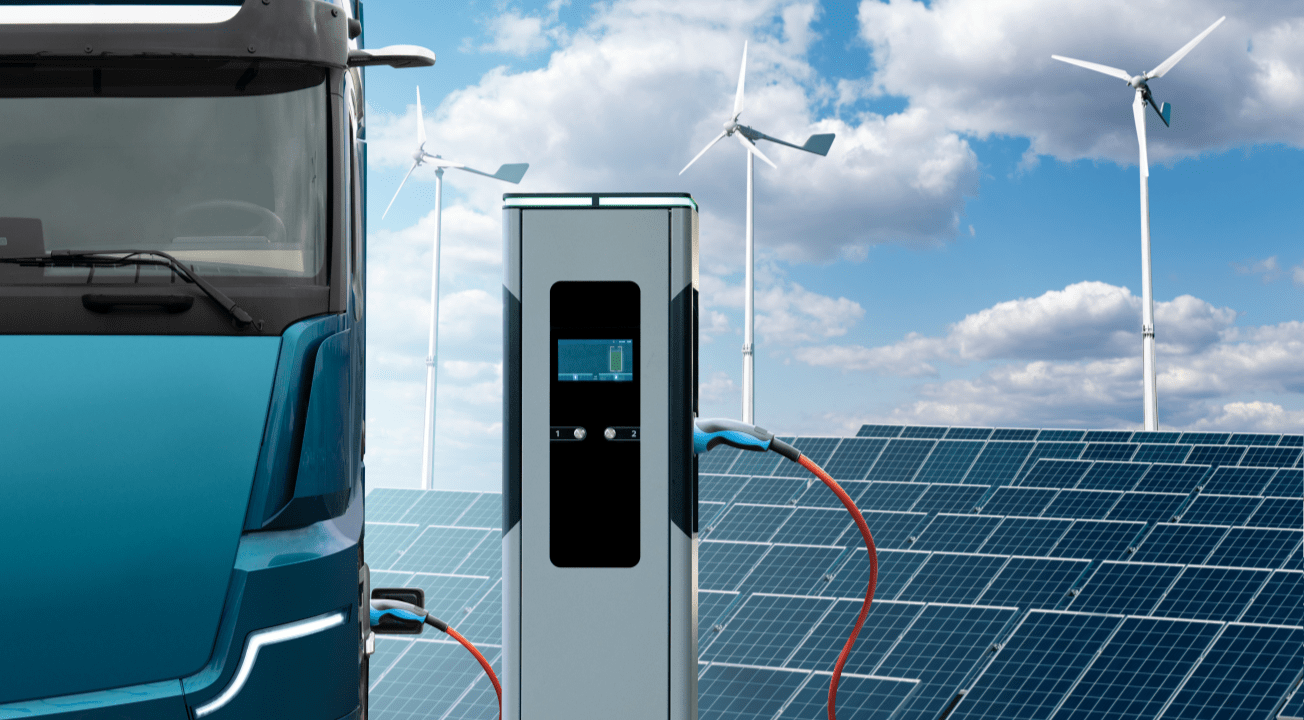
Solutions for Electric Trucks, Fleets and Delivery Equipment
Electric fleet vehicles offer significant advantages over traditional gasoline and diesel models, including lower fuel costs, reduced maintenance, and a smaller carbon footprint. As battery technology improves, electric trucks, vans, and delivery vehicles are becoming more viable for long-range use, making them an increasingly attractive option for fleet operators. These batteries need to be safe, high energy dense, and fast charging.

Solutions for Electrification of Agricultural and Heavy Equipment
The shift toward electric-powered agriculture and construction equipment is gaining significant momentum as industries seek more sustainable and cost-effective solutions. With increasing pressure to reduce carbon emissions and improve operational efficiency, electric equipment offers a cleaner alternative to traditional diesel-powered machines. As battery technology advances, the adoption of electric construction and farming equipment is set to revolutionize these sectors, driving both sustainability and productivity for the future.
H.B. Fuller's Adhesive Solutions for Clean Energy
The world is transitioning to clean energy, and every connection matters. From electric vehicles to renewable energy storage, batteries are the cornerstone of a sustainable future. Hear from Katie about how H.B. Fuller is applying our decades of expertise and a global network of resources to support the growing demands of battery manufacturing.
Travailler avec l’équipe Batterie de H.B. Fuller
-
Connaissance et expertise des matériaux
-
Équipe mondiale avec un focus local
-
Support technique & Tests
-
Formulations sur mesure
H.B. Fuller s’appuie sur plus de 130 ans de connaissance et d’expertise des matériaux pour soutenir le marché des énergies propres avec des solutions avancées adaptées aux applications de batteries, de stockage d’énergie, d’éolien et de solaire. Nos adhésifs spécialisés, mastics et matériaux de gestion thermique sont conçus pour répondre aux exigences uniques de ces marchés, notamment en matière de sécurité, de durabilité et de stabilité.
Grâce à une compréhension approfondie de la science des matériaux et des défis de l’industrie, nous proposons des produits qui améliorent les performances, simplifient la fabrication et garantissent une fiabilité à long terme. En collaborant avec H.B. Fuller, les fabricants bénéficient de matériaux de pointe et de conseils d’experts pour des systèmes optimisés et de haute qualité dans un marché compétitif.
- Approvisionnement stratégique
- Une équipe unifiée d’experts en R&D
- Plus de 10 000 adhésifs dans notre portefeuille
- Formulés avec une variété de chimies
L’équipe d’énergie propre de H.B. Fuller apporte une expertise mondiale avec un fort focus local, garantissant un soutien adapté où que vous soyez. Notre réseau d’experts comprend les exigences des marchés régionaux et les réglementations en vigueur, nous permettant de fournir des solutions à la fois innovantes et précisément adaptées aux besoins locaux.
Nous collaborons étroitement avec nos clients à travers le monde pour offrir des perspectives locales et des réponses rapides, soutenues par les vastes ressources d’un leader mondial. Avec un engagement envers un service localisé et une expertise globale, nous permettons à nos partenaires de réussir sur des marchés diversifiés grâce à des matériaux répondant aux normes les plus élevées en matière de qualité, de sécurité et de performance.
H.B. Fuller offre un support technique robuste et des capacités de test pour aider les clients à atteindre des performances optimales dans leurs applications d'énergie propre. Notre équipe technique dédiée collabore étroitement avec vous pour comprendre vos défis spécifiques et optimiser les solutions matérielles, en veillant à ce qu'elles répondent aux normes les plus élevées.
Grâce à des partenariats de test à la pointe de la technologie et à une expertise dans les applications de batteries, de stockage d'énergie, d'éolien et de solaire, nous fournissons des informations qui accélèrent le développement de produits et améliorent vos conceptions. Notre engagement envers l'excellence technique signifie que vous pouvez compter sur nous pour des conseils précis et des tests concrets afin de garantir que chaque solution offre des résultats exceptionnels.
Chez H.B. Fuller, nous ne proposons pas simplement des solutions prêtes à l’emploi—nous prenons le temps de comprendre vos exigences spécifiques en matière de conception et de formuler une solution sur mesure qui répond précisément à vos besoins. Notre équipe collabore étroitement avec vous, en s’appuyant sur une expertise approfondie du secteur et des capacités avancées de R&D pour créer des matériaux qui améliorent les performances de vos applications uniques. Des adhésifs personnalisés aux produits spécialisés de gestion thermique, nous nous engageons à fournir des solutions innovantes et adaptées à vos besoins, vous permettant de réussir dans un marché compétitif.

Optimizing Thermal Management in EV Power Storage for Safer, Stronger Batteries
Learn about advanced thermal management solutions that enhance the performance and safety of electric vehicle (EV) battery and energy storage systems (ESS). This eBook explores why thermal management is crucial to batteries and goes in-depth into cutting-edge materials and technologies designed to optimize heat dissipation and protect battery systems.
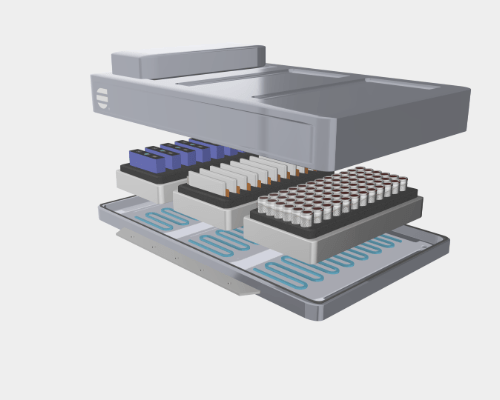
CELL TO CARRIER BONDING
Secure cell placement and structural support
Cell carriers for cylindrical cells provide structural support, ensuring cells stay securely in place while maintaining proper spacing for safety and thermal management. They simplifies assembly, especially in automated processes. Using adhesives to attach a cell carrier to a cylindrical cell provides secure placement, preventing movement during assembly or operation.
DIELECTRIC COATINGS
Prevent short circuits and battery malfunction
By creating an insulating layer that prevents unwanted electrical discharge and thermal events, our coatings ensure that your batteries operate safely, efficiently, and with a longer lifespan. Curable by ultra-violet light in just seconds, these coatings can drastically improve cycle time when compared to heat cured and powder coatings.
FOAM ENCAPSULATION
Flame retardant foams are the seatbelt of battery safety
H.B. Fuller© EV Protect™ product family of ultra-lightweight foams minimizes thermal propagation risks of cylindrical, pouch and prismatic cells. In addition to their thermal and flame-retardant properties, they also provide NVH dampening and protection from environmental impact as well as enhanced structural integrity.
HOUSING SEALING
Reliable Sealants and Gaskets for Enhanced Battery Protection and Reworkability
H.B. Fuller® EV Seal product family of sealants, cure-in-place gaskets (CIPG) and form-in-place gaskets (FIPG) are specifically designed to protect battery packs from environmental threats while ensuring easy access for maintenance and re-entry. By providing a secure barrier against dust, moisture, and humidity, they safeguard the internal components of the battery, enhancing its performance and longevity.
Frequently Asked Questions About EV Battery Materials
-
What types of adhesives are used in EV battery packs?
EV battery packs may use structural adhesives, flexible adhesives, thermally conductive adhesives, pressure-sensitive adhesives, sealants and encapsulation materials. These materials can support cell bonding, module assembly, pack construction, thermal management, environmental sealing and the attachment of protective components.
The appropriate adhesive depends on the cell format, substrate combination, bond-line geometry, cure process, production speed, operating environment, thermal requirements and service-life expectations. Cylindrical, prismatic and pouch-cell designs may have different bonding and processing requirements.
-
How do thermal interface materials affect battery performance and lifespan?
Thermal interface materials help transfer heat between battery components and cooling surfaces by filling air gaps and improving contact. Better thermal contact can help the battery thermal-management system maintain a more consistent operating temperature.
Temperature uniformity is important because excessive heat and large temperature differences between cells can affect charging performance, system efficiency and long-term durability. Actual results depend on the battery design, cooling system, material properties, bond-line thickness and operating conditions.
-
What is the difference between a thermal adhesive and a thermal gap filler?
A thermal adhesive provides both bonding and heat-transfer functions, while a thermal gap filler is primarily designed to fill variable spaces and create a heat-transfer path between components. Certain gap fillers may also provide mechanical stability, but they should not automatically be treated as structural adhesives.
The correct choice depends on whether the application requires structural strength, flexibility, reworkability, flow control, a specific gap thickness or a particular thermal conductivity level.
-
How do dielectric coatings improve EV battery safety?
Dielectric coatings electrically insulate conductive surfaces and help reduce the risk of unintended electrical contact. They may be applied to battery components, housings, busbar regions or other areas where electrical isolation is required.
Coating selection should consider dielectric performance, film thickness, adhesion, coverage, temperature exposure, environmental aging and compatibility with adjacent materials. The coating should be validated within the complete battery design rather than evaluated solely as an individual material.
-
How do polyurethane foams help manage shock and vibration in battery modules?
Polyurethane foams can help cushion cells and components, fill spaces, limit movement and absorb mechanical energy generated by vibration or impact. These functions can help stabilize components during vehicle operation.
Foam density, hardness, expansion behavior, adhesion, compression response, temperature resistance and flame-retardancy requirements should be evaluated for the intended application. The foam must also be compatible with the battery’s cell chemistry, assembly process and surrounding materials.
-
How can adhesives help reduce EV battery pack weight?
Adhesives can support lightweight battery designs by joining dissimilar materials, distributing loads over a larger area and reducing the need for certain mechanical fasteners. They may also allow engineers to use thinner or differently configured components when the complete structure has been validated.
Any lightweighting benefit must be evaluated at the system level. Engineers should consider adhesive mass, joint design, crash and vibration performance, manufacturing requirements, serviceability and end-of-life objectives.
-
What materials can help protect an EV battery during a thermal event?
Thermal barriers, flame-retardant foams, protective coatings, insulating materials and application-specific adhesives can contribute to a battery system’s thermal-event mitigation strategy. Depending on their design and placement, these materials may help manage heat transfer or protect adjacent components.
No single material can independently ensure battery safety. Performance depends on cell chemistry, pack architecture, cooling design, venting, detection systems, mechanical protection and the validated interaction of all system components.
-
How are adhesives selected for cylindrical, prismatic and pouch cells?
Adhesives are selected by evaluating the cell format, available bonding area, movement during cycling, substrate materials, thermal-management design and manufacturing process. Cylindrical cells may require precise placement and gap management, while prismatic and pouch cells may introduce different expansion, compression and surface-area considerations.
Selection should also account for cure conditions, dispensing method, production speed, bond-line control, vibration exposure, operating temperature, repair requirements and applicable tests.
-
Can EV battery adhesives support automated manufacturing?
Yes, adhesives formulated for controlled dispensing and consistent curing can support automated EV battery assembly. Automation considerations include viscosity, flow behavior, open time, cure speed, dispensing accuracy, equipment compatibility and process monitoring.
Manufacturers should validate the complete process, including material storage, conditioning, dispensing, detection, cure, inspection and quality control. A material suitable for the final battery design must also be compatible with the intended production environment.
-
What testing should be completed before selecting an EV battery adhesive?
EV battery adhesives should be tested using the intended substrates, surface preparation, bond geometry, application equipment and cure conditions. Testing may include adhesion, vibration, impact, thermal cycling, temperature exposure, humidity, chemical resistance, dielectric performance and thermal conductivity, depending on the application.
Testing should reflect the actual battery design and service environment. Product data can support initial screening, but final material selection should be based on application-specific validation and applicable customer, industry and regulatory requirements.
Need help selecting a material for your EV battery application?
Connect with H.B. Fuller’s battery specialists to discuss your cell format, substrates, thermal requirements, production process and testing needs.

Demandez un devis pour votre prochain projet
View Related Pages
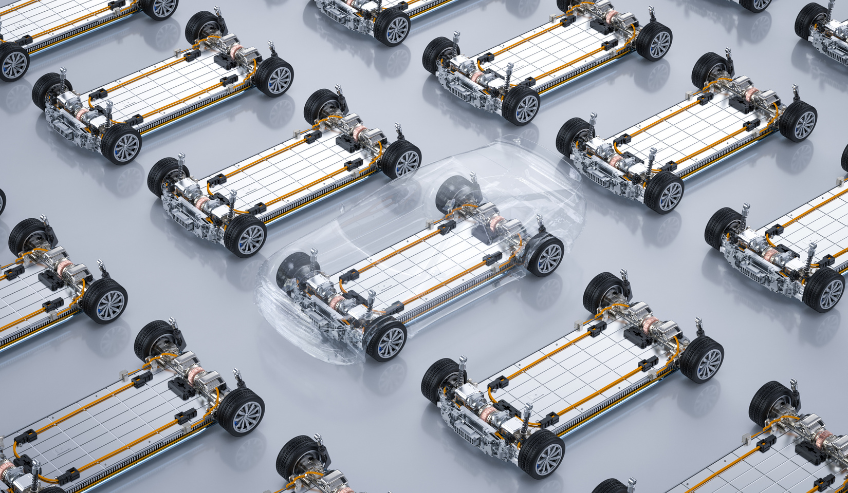 Mousses ignifugées : la "ceinture de sécurité"
L'article discute de la manière dont plusieurs incidents incidents incidents incidents ont élevé des préoccupations en matière de sécurité, incitant les régulateurs et les fabricants à prendre des mesures pour prévenir de futures occurrences. Avec une pression croissante, de nouvelles normes de sécurité pourraient aider à renforcer la confiance des consommateurs et à faire des véhicules électriques une option plus fiable.
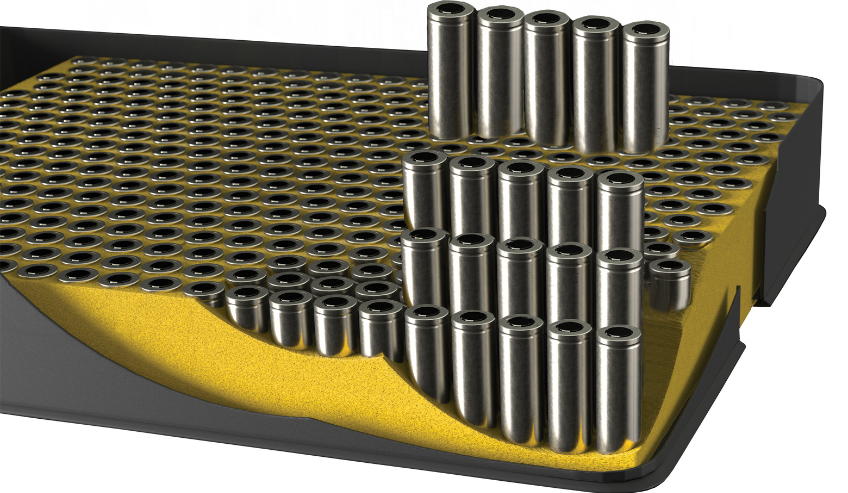 Technologie Cell-To-Pack (CTP) dans les véhicules électriques
La technologie "Cell-to-pack" (CTP) est un procédé de fabrication utilisé dans la production de packs de batteries lithium-ion. Elle consiste à connecter directement les cellules de batterie individuelles en configurations série et parallèle sans avoir besoin de modules ou de composants supplémentaires. Dans cet article, nous explorerons à la fois les points forts et les inconvénients de la technologie CTP et nous discuterons de la manière dont elle peut aider à réduire le poids global du pack de batteries, la complexité de la conception et l'espace au sein du module, tout en introduisant plusieurs défis pour la conception des batteries : perte de support structurel, étanchéité efficace et risque accru d'incendie de la batterie.
 Tendances des Piles de 2025 : Qu'est-ce qui Alimente l'Avenir de l'Énergie?
La révolution des véhicules électriques (VE) est bien en cours. Au cours des dernières années, les VE sont passés de perturbateurs de marché de niche à des options de transport grand public, les constructeurs automobiles mondiaux faisant des investissements substantiels dans l'électrification. À mesure que l'adoption de la mobilité électrique s'accélère, l'accent se déplace de la transformation initiale à l'optimisation des technologies qui façonneront la prochaine génération de batteries.